
In the heavy machinery and mineral processing industries, the cheek plate—a critical wear part that protects crushers and enhances grinding efficiency—directly influences equipment uptime and overall production costs. Selecting the right high-wear cheek plate is not a one-size-fits-all decision; it requires a careful match between material properties and specific operating conditions.
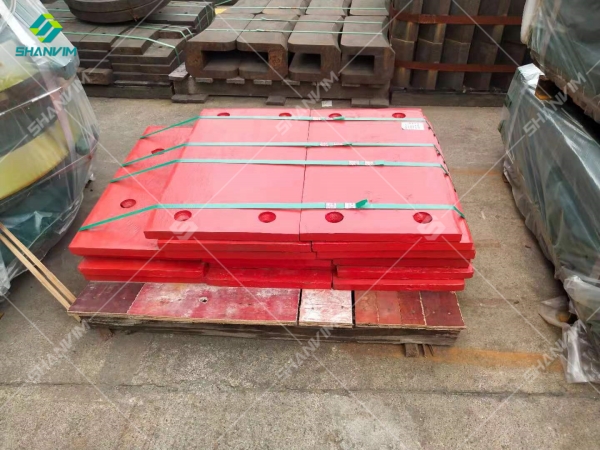
Material Selection: Balancing Hardness and Toughness
Industry experts emphasize that choosing a cheek plate should never be based on hardness alone. The optimal balance between wear resistance and impact toughness is the key to long service life. Currently, three main material categories dominate the market:
High Manganese Steel (e.g., Mn13Cr2,Mn18Cr2 series): Known for its exceptional toughness, this material work-hardens under heavy impact. Its surface hardness can rise from an initial HB200 to over HB500 under continuous striking, while its core remains ductile. This makes it ideal for primary crushing applications with large feed sizes and high impact forces, such as processing limestone or iron ore. However, its wear resistance is not fully utilized in low-impact scenarios.
High Chromium Cast Iron (e.g., Cr26): Recognized as a top-tier wear-resistant material, this alloy achieves hardness levels of HRC58-65 and offers wear life 2-3 times longer than that of high manganese steel. Its hard carbide microstructure excels at resisting abrasive wear, making it suitable for grinding hard materials like quartz, granite, and cement clinker. The trade-off is reduced toughness, making it prone to breakage under severe impact from large lumps.
Bimetal Composite Materials: This advanced option addresses the conflict between wear resistance and impact resistance. By metallurgically bonding a high-chromium cast iron working face (for wear protection) with a high-manganese or low-alloy steel base (for impact absorption), bimetal cheek plates perform exceptionally well in variable feed conditions where impact loads fluctuate. Although the initial cost is higher, the extended life cycle often results in lower total cost of ownership.
The Role of Casting and Heat Treatment
Material chemistry alone does not guarantee performance; precise casting and heat treatment are equally vital. Advanced processes such as resin-sand molding or lost-foam casting ensure tight dimensional tolerances, allowing the cheek plate to fit snugly against the mill shell. This prevents loosening or abnormal impact during operation. Furthermore, well-designed working surfaces—such as corrugated or stepped profiles—can significantly improve grinding efficiency.
Heat treatment is the “soul” of the final product. For high manganese steels, a rigorous water toughening process (heating to 1050–1100°C followed by rapid water quenching) is essential to obtain a stable austenitic structure and prevent brittle failure. For high chromium cast irons, precise quenching and tempering schedules are critical to evenly distribute carbides and achieve target hardness levels.
A Proven Partner in Wear Solutions
For operations seeking reliable, high-performance cheek plates, manufacturers with extensive metallurgical expertise are indispensable. Zhejiang Jinhua Shanvim Industry And Trade Co., Ltd. stands out as an established specialist with over three decades of experience in wear- and heat-resistant castings. With an annual production capacity exceeding 20,000 tons, Shanvim serves diverse industries including mining, cement, and construction materials.
The company’s core strengths include:
A Full Range of Material Capabilities: From high manganese and ultra-high manganese steels to low-, medium-, and high-chromium cast irons, as well as bimetal composites, Shanvim offers mature processes to meet complex operational needs.
Proven Bimetal Composite Technology: Shanvim has accumulated extensive practical know-how in bimetal series wear parts—a key solution for extending service life in applications where both high abrasion and severe impact occur.
Practical Recommendations for Buyers
When selecting a cheek plate, it is recommended to provide the manufacturer with detailed operational parameters—including equipment model, material type, feed size, and mill specifications—to facilitate accurate material matching. Buyers should also request formal inspection reports covering hardness and impact toughness data. These documents not only guarantee quality but also serve as important references for future performance verification.
Conclusion
No single cheek plate material works universally. Achieving “high wear resistance” always depends on finding the optimal match for a specific application. By partnering with an experienced, full-spectrum manufacturer like Shanvim and following a science-based selection process, operators can effectively reduce wear consumption, boost throughput, and lower overall production costs.
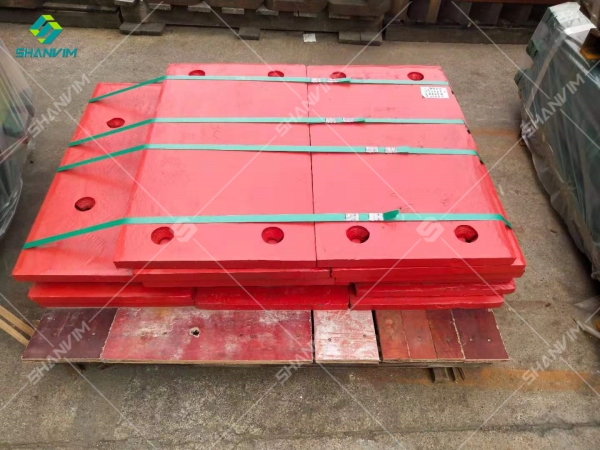
SHANVIM as a global supplier of crusher wearing parts, we manufacture cone crusher wearing parts for different brands of crushers. We have more than 20 years of history in the field of CRUSHER WEAR PARTS. Since 2010, we have exported to America, Europe, Africa and other countries in the world.
Post time: Aug-13-2026