
Introduction: The Economic Case for Hardfacing
In the crushing and mining industry, jaw plates represent one of the most significant consumable costs. These critical components endure extreme impact, sliding abrasion, and compressive forces that gradually erode their working surfaces. While replacement with new parts has traditionally been the standard approach, hardfacing repair offers a compelling alternative that can dramatically extend service life while reducing operational costs and environmental impact.
The hardfacing process involves depositing specialized wear-resistant alloys onto worn surfaces, effectively restoring the original profile and creating a new protective layer that often outperforms the original material. With over 30 years of manufacturing experience, SHANVIM has developed extensive expertise in both the production and restoration of crusher wear parts, offering a comprehensive range of materials and repair solutions tailored to specific application requirements.
Understanding Jaw Plate Materials and Their Work-Hardening Properties
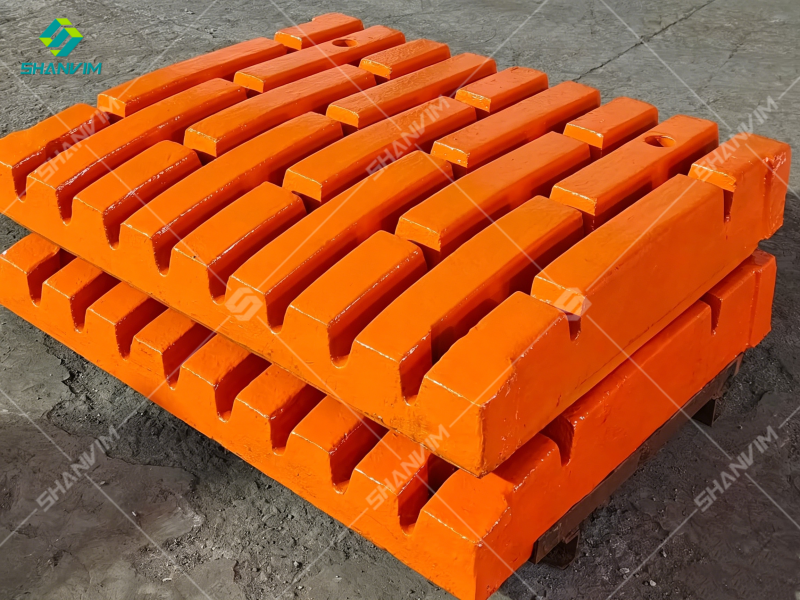
Jaw plates are typically manufactured from austenitic manganese steel, a material renowned for its exceptional work-hardening capability. The surface hardness of high manganese steel increases significantly under impact—from approximately 220 HB to over 550 HB—while the core maintains its toughness and ductility. This unique characteristic makes manganese steel ideal for crushing applications where repeated impact and pressure occur.
SHANVIM offers an extensive selection of jaw plate materials to meet diverse crushing requirements:
Mn13Cr2 (13% Manganese, 2% Chromium): A standard grade offering excellent work-hardening properties and good wear resistance for moderate impact applications.
Mn18Cr2 (18% Manganese, 2% Chromium): Enhanced manganese content provides superior work-hardening capability for applications with higher impact forces.
Mn22Cr2 (22% Manganese, 2% Chromium): The highest manganese grade offering maximum work-hardening potential and exceptional impact resistance.
Embedded Alloy Options: For the most demanding applications, SHANVIM offers jaw plates with alloy inserts embedded in the working surface—available in Mn13Cr2, Mn18Cr2, and Mn22Cr2 base materials. These strategically placed wear-resistant elements significantly enhance abrasion resistance in high-wear zones.
Additionally, SHANVIM can customize special material compositions based on specific customer requirements, ensuring optimal performance for unique crushing conditions.
The Fundamentals of Jaw Plate Hardfacing
Hardfacing repair is a specialized welding process that deposits wear-resistant alloys onto worn jaw plate surfaces. When properly executed, this technique can restore the original geometry of the jaw plate while creating a surface layer with enhanced wear characteristics. The process involves several critical considerations:
Material Compatibility
The success of hardfacing depends fundamentally on selecting compatible filler metals. For high manganese steel jaw plates, austenitic manganese steel electrodes are recommended to match the base material’s characteristics. These electrodes produce weld deposits that work-harden under impact, maintaining the crucial gradient hardness profile that makes manganese steel effective.
Temperature Control: The Critical Factor
Temperature management is the single most important aspect of hardfacing high manganese steel. When this material is heated above 300°C for extended periods, carbides precipitate at grain boundaries, dramatically reducing toughness and ductility and increasing crack susceptibility. Critical temperature control practices include:
1.No preheating: Unlike many welding processes, hardfacing manganese steel should begin at ambient temperature
2.Low interpass temperatures: Between welding passes, the workpiece temperature should not exceed 150°C
3.Minimum heat input: Use low welding currents and stringer bead techniques rather than wide weaving
4.Rapid cooling: Water cooling may be applied between passes to maintain low temperatures
5.Avoid continuous welding: Allow the workpiece to cool before proceeding with additional passes
Surface Preparation
Proper surface preparation significantly influences repair quality. Before hardfacing, the work-hardened layer on the worn surface should be ground away to prevent cracking at the interface between weld metal and base metal. Additionally, all oil, grease, and debris must be thoroughly removed from the repair area to ensure sound weld quality.
Multi-Layer Application
For deeper wear restoration, a multi-layer approach is recommended:
1.Buffer Layer: When rebuilding substantial material loss, a buffer layer using high manganese electrodes provides a compatible foundation
2.Hardfacing Layer: The final wear-resistant layer is applied using specialized hardfacing electrodes or flux-cored wires
3.Post-Weld Treatment: No post-weld heat treatment should be applied, as this would risk carbide precipitation and embrittlement
Technical Challenges and Best Practices
Understanding 13% Manganese Steel Welding Characteristics
The metallurgical properties of 13% manganese steel present specific challenges during hardfacing. Research indicates that around 1.5-2mm below the work-hardened surface, hardness drops markedly, and the material becomes susceptible to cracking if overheated. This underscores the importance of precise temperature control and proper technique.
Electrode Selection
Hardfacing electrodes are available in various compositions to address different wear mechanisms. For manganese steel jaw plates, the following categories are commonly used:
Austenitic manganese electrodes: These match the base material and provide excellent work-hardening capability
Martensitic electrodes: Some hardfacing applications use martensite-type electrodes with higher initial hardness for specific wear conditions
High recovery electrodes: Products with 120-140% recovery ratios provide efficient material deposition for extensive rebuilds
Industry sources note that ZD6 electrodes, for example, deposit material with hardness of 35-40 HRC that work-hardens to 50-55 HRC under impact, making them suitable for high-manganese jaw plates and crusher hammers.
Economic Considerations
Hardfacing repair typically costs substantially less than full replacement while extending service life significantly. In some applications, properly hardfaced components can achieve two to six times the service life of unhardfaced parts. The cost benefits include:
Extended component life: Reduction in replacement frequency
Reduced downtime: Less frequent maintenance interruptions
Inventory optimization: Fewer spare parts needed
Sustainability benefits: Reduced material consumption and energy use
SHANVIM: A Heritage of Excellence in Wear Parts
With more than three decades of manufacturing experience, SHANVIM has established itself as a leader in precision-engineered crusher wear parts. The company’s expertise extends beyond production to encompass the full lifecycle of wear components, including:
Advanced metallurgy: Extensive knowledge of manganese steel formulations and their application-specific performance characteristics
Precision engineering: Optimized tooth profiles (sinusoidal and corrugated patterns) that create bending stress points in rock and facilitate the beneficial “rock-on-rock” effect
Bimetallic capabilities: For highly abrasive applications, SHANVIM offers bimetallic options combining high-chromium iron wear layers with ductile steel backing
SHANVIM’s material grades—Mn13Cr2, Mn18Cr2, and Mn22Cr2—are specifically engineered to deliver the optimal balance of work-hardening capability, toughness, and wear resistance for crushing applications. The embedded alloy options further extend performance boundaries in the most demanding conditions.
Application-Specific Considerations
Jaw Crusher Types
Different jaw crusher designs and operating conditions influence hardfacing approaches. Primary crushers handling oversized, abrasive feed may benefit from more aggressive hardfacing profiles, while secondary and tertiary applications might require different material selections.
Wear Patterns
Jaw plates typically exhibit non-uniform wear, with certain zones experiencing more rapid material loss. Hardfacing can target specific high-wear areas while leaving less worn sections unaltered, optimizing material usage and extending overall service life.
Operating Conditions
Factors such as feed material abrasiveness, moisture content, and crusher operating parameters influence hardfacing material selection. SHANVIM’s extensive application experience enables the recommendation of optimal hardfacing approaches for specific operating conditions.
Conclusion: The Strategic Value of Hardfacing
Hardfacing repair represents a strategic approach to managing crusher wear parts that delivers measurable operational and economic benefits. By extending the service life of jaw plates through careful restoration, mining and aggregate operations can:
Reduce operating costs through lower replacement part expenditure
Minimize downtime by extending maintenance intervals
Improve sustainability through reduced material consumption
Maintain crushing efficiency by restoring original geometry
Customize wear resistance to match specific application demands
SHANVIM’s comprehensive capabilities—from high-quality replacement parts manufactured in Mn13Cr2, Mn18Cr2, and Mn22Cr2 grades, to embedded alloy options and custom material formulations—ensure that operations have access to both premium replacement parts and the technical expertise needed to implement effective hardfacing programs.
For operations seeking to optimize their crushing performance while controlling costs, hardfacing repair of jaw plates deserves serious consideration as a proven, effective, and economical solution.
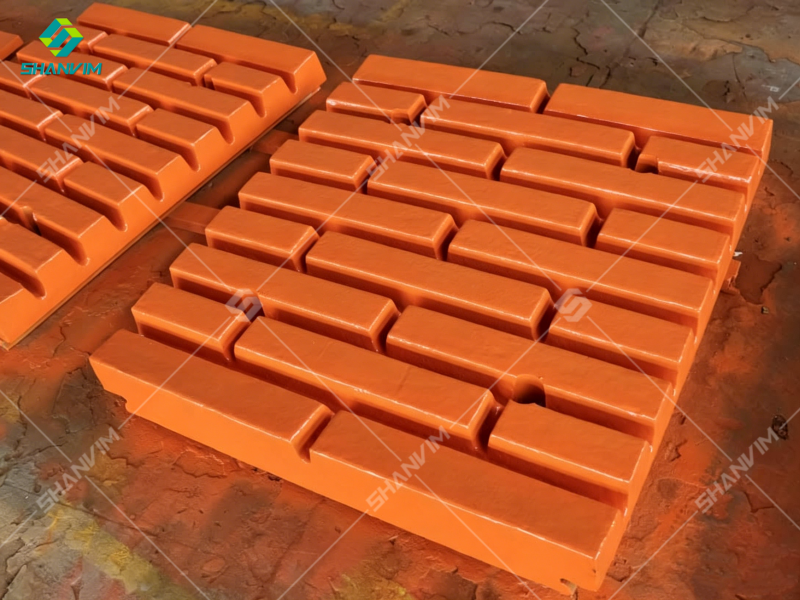
For more information about SHANVIM’s complete range of crusher wear parts and hardfacing technical support, please contact our technical sales team.
Post time: Jun-25-2026