
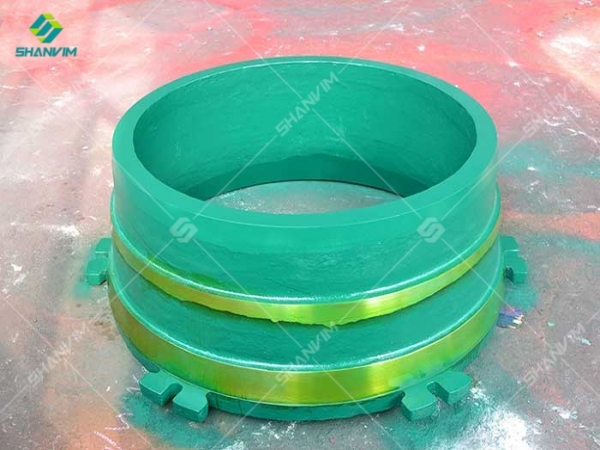
In an industry increasingly dominated by rapid prototyping and foam-based casting, SHANVIM has reaffirmed its commitment to a time-tested approach: wooden patterns paired with sand floor molds for producing high-performance crusher wear parts. According to the company’s latest technical brief, this traditional method delivers metallurgical advantages that modern alternatives like lost foam cannot match—particularly in hollow castings subjected to extreme abrasion.
Why Wooden Patterns Outperform Foam in Critical Castings
SHANVIM’s process uses aged, air-dried hardwood selected specifically for its resistance to warping and cracking. Unlike green or kiln-dried timber, this well-seasoned wood maintains dimensional stability over thousands of molding cycles, offering superior wear resistance on the pattern itself.
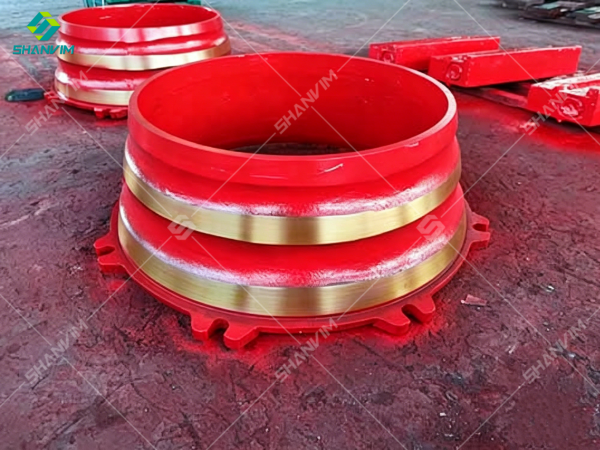
More importantly, the sand floor mold combined with hollow casting techniques creates a thermal environment that benefits the final steel structure. Because the sand mold allows rapid heat dissipation during pouring, the molten steel solidifies quickly. This high cooling rate refines the grain structure, producing finer, denser crystallography with minimal internal porosity. The result is a wear part—such as mantles, bowl liners, or jaw plates—that exhibits greater resistance to impact and abrasive fracture.
SHANVIM noted that small internal gas pores are effectively controlled in this process, further enhancing the integrity of the finished component.
Contrast with Lost Foam Patterns
Lost foam casting, by contrast, typically uses CNC-carved aluminum patterns to cut foam shapes. While this method lowers tooling costs and offers appealing surface aesthetics, SHANVIM engineers point to inherent limitations. The foam vaporization process can leave minor surface imperfections—pits or “orange peel” effects—and the overall metallurgical structure is often less perfect due to different heat extraction rates.
“The foam method produces parts that look very nice to dealers and manufacturers because the external finish is attractive,” a SHANVIM spokesperson explained. “But for the end user who needs maximum wear life in a crusher, the wood-patterned, sand-mold casting offers a tougher, more reliable product.”
Cost vs. Value: Direct Users vs. Distributors
SHANVIM acknowledges that wooden patterns carry a higher upfront cost due to the craftsmanship and aging process required. However, for direct users—quarries, recycling facilities, and mining operations—the extended service life of the component offsets the initial premium.
In contrast, distributors and OEM dealers often prefer lost foam patterns because of lower entry costs and the visually smoother surface of the as-cast part, which appeals to retail buyers less focused on long-term wear data.
SHANVIM’s Commitment to Quality
SHANVIM continues to invest in premium wooden patterns for its core line of crusher wear parts, particularly those requiring hollow configurations. The company emphasizes that while modern methods have their place, the physics of solidification remains unchanged: faster cooling equals finer grain, and finer grain equals longer wear life.
By sticking with aged-wood patterns and sand floor molds, SHANVIM delivers components engineered for the hardest working conditions—where durability matters more than surface cosmetics.
SHANVIM as a global supplier of crusher wearing parts, we manufacture cone crusher wearing parts for different brands of crushers. We have more than 20 years of history in the field of CRUSHER WEAR PARTS. Since 2010, we have exported to America, Europe, Africa and other countries in the world.
Post time: Jun-11-2026