
The mantle and bowl liner are the two most important wear parts in any cone crusher. Their condition directly affects crushing efficiency, product quality, and operating costs. Yet many operators overlook simple maintenance routines that could significantly extend liner life. This article covers five key maintenance practices to keep your mantle and bowl liner in top shape.
Subheading 1: Why Mantle and Bowl Liner Are the Heart of Your Cone Crusher
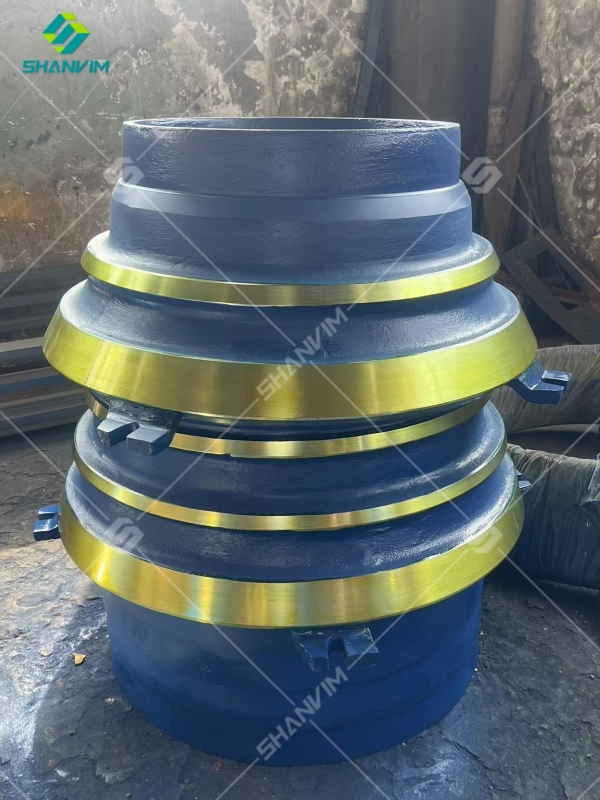
In any crushing operation, the mantle and bowl liner are the two most critical wear parts inside a cone crusher. The mantle moves in an eccentric motion inside the stationary bowl liner, creating a crushing chamber that breaks down rocks and ores. Because they are in direct contact with abrasive materials, these components experience the highest rate of wear. Proper maintenance of the mantle and bowl liner not only ensures consistent product size but also prevents unplanned downtime. Operators who neglect these parts often face uneven wear, reduced throughput, and even structural damage to the crusher frame. Understanding the wear patterns—such as crushing in the lower chamber versus the upper chamber—can help you adjust settings before problems escalate. Simply put, the health of your cone crusher starts with the condition of its mantle and bowl liner.
Subheading 2: Daily Visual Inspections – Catching Small Issues Before They Become Big Failures
A five-minute visual inspection every shift can save thousands of dollars in repair costs. Start by checking for visible cracks on the mantle and bowl liner. Even hairline fractures can propagate quickly under crushing forces, leading to liner breakage and potential damage to the crusher bowl or head. Next, look for uneven wear: if the mantle shows excessive wear on one side, it may indicate a misaligned eccentric bushing or a worn thrust bearing. Also inspect the locking bolts and feed distribution plates. Uneven feed can cause localized wear spots, forcing you to replace liners prematurely. Listen for metallic knocking sounds during operation—this often means the mantle is loose or the bowl liner has shifted. Document everything in a daily log. Over time, this data helps predict liner replacement intervals and optimizes your maintenance schedule.
Subheading 3: Optimizing Crusher Settings to Minimize Wear on Mantle and Bowl Liner
One of the most overlooked maintenance strategies is setting the crusher parameters correctly. The closed side setting (CSS) directly affects how much pressure the mantle and bowl liner endure. A CSS that is too tight forces the liners to grind material rather than crush it, accelerating wear by up to 50%. Conversely, a CSS that is too open reduces efficiency and creates oversized product. Always follow the manufacturer’s recommended CSS range for your specific material hardness and feed size. Another critical setting is the rotation speed and feed distribution. Evenly distributed feed across the crushing chamber ensures that the entire mantle and bowl liner wear uniformly. Use a level indicator or an automated feed control system to prevent segregation. Additionally, keep the crushing force within the designed limit—overloading the crusher not only wears liners faster but can also crack the mantle head nut or the bowl liner backing material.
Subheading 4: Lubrication, Temperature Monitoring, and Hydraulic System Care
While the mantle and bowl liner themselves are not lubricated, their supporting structure depends entirely on a healthy lubrication system. Contaminated oil is the number one cause of premature wear on the eccentric bushing, which indirectly accelerates mantle and bowl liner damage. When the eccentric bushing wears unevenly, the mantle begins to wobble incorrectly, causing the bowl liner to experience point loading. Change your oil and filters at the intervals specified by the crusher manufacturer—typically every 500 to 1,000 hours. Monitor oil return temperature: a sudden rise above 55°C often indicates excessive friction or a failing bearing. Also, check the hydraulic system that holds the bowl liner in place. Hydraulic lock failure can allow the bowl liner to rotate, leading to immediate metal-to-metal contact between the mantle and liner. Test the hydraulic pressure daily and inspect hoses for leaks. Remember, a well-lubricated crusher keeps the mantle centered and the bowl liner stable.
Subheading 5: When to Replace Mantle and Bowl Liner – Wear Limits and Change-Out Best Practices
Knowing exactly when to replace your mantle and bowl liner is a skill that balances cost, safety, and production. Most manufacturers mark a minimum thickness limit—usually when the liner has worn down to 60–70% of its original weight or when the crushing profile becomes flat. Running liners beyond this limit not only reduces product quality but also increases the risk of a liner fracture. A broken mantle can drop into the crushing chamber, destroying the entire crusher. When replacing, always use original equipment manufacturer (OEM) or high-quality aftermarket liners made from manganese steel (e.g., Mn14Cr2, Mn18Cr2). Before installation, check the backing material (epoxy or zinc) for voids—improper backing causes the liner to move under load. Tighten the mantle nut to the exact torque specification, and verify the bowl liner is fully seated. After replacement, run the crusher at no load for 15–20 minutes, then re-torque. Finally, record the installation date and expected hours of life based on your material abrasiveness. Proactive replacement avoids catastrophic failures and keeps your crushing plant running smoothly.
Conclusion (optional but included for completeness):
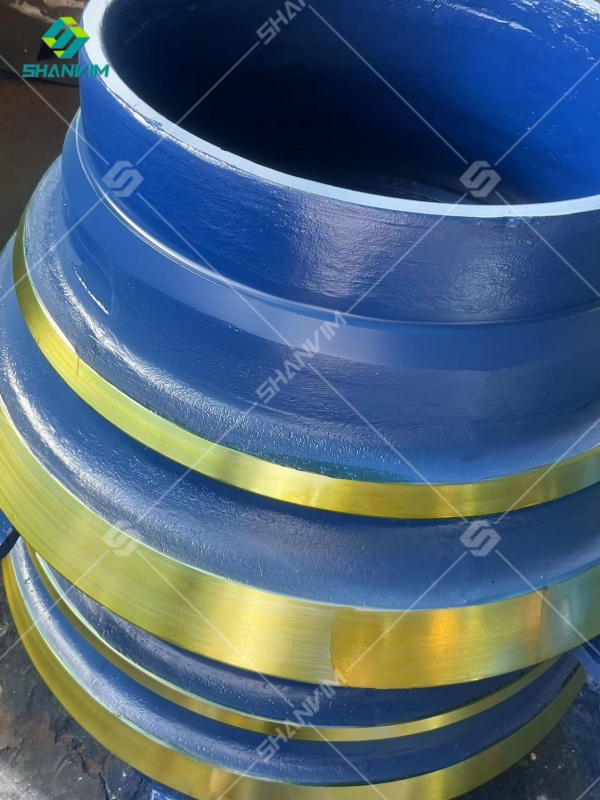
Maintaining a cone crusher—especially the mantle and bowl liner—does not require complex engineering. It requires consistency. Daily visual checks, correct CSS settings, clean lubrication, and timely liner replacements will extend component life by 30% or more. For operators in mining and aggregate industries, these five maintenance pillars are not optional; they are the difference between profitable uptime and costly repairs. Remember: your mantle and bowl liner work together. Treat them as a pair, inspect them as a pair, and replace them as a pair. That is the formula for reliable cone crusher performance.
SHANVIM as a global supplier of crusher wearing parts, we manufacture cone crusher wearing parts for different brands of crushers. We have more than 20 years of history in the field of CRUSHER WEAR PARTS. Since 2010, we have exported to America, Europe, Africa and other countries in the world.
Post time: Apr-16-2026