
JINHUA, China – When a slurry pump housing fails prematurely, replacing the entire pump is expensive and often unnecessary. The smarter, more cost-effective solution is custom manufacturing. But what does it take to get a custom-engineered slurry pump housing that truly fits your application?
For SHANVIM, a China-based foundry specializing in wear-resistant castings, the answer lies in three categories of information: structure and assembly dimensions, material and process requirements, and core performance parameters. A successful custom order depends not only on the foundry’s capability but also on the clarity and completeness of the technical data provided by the user.
The Custom Reality: You Do Not Need a Whole Pump
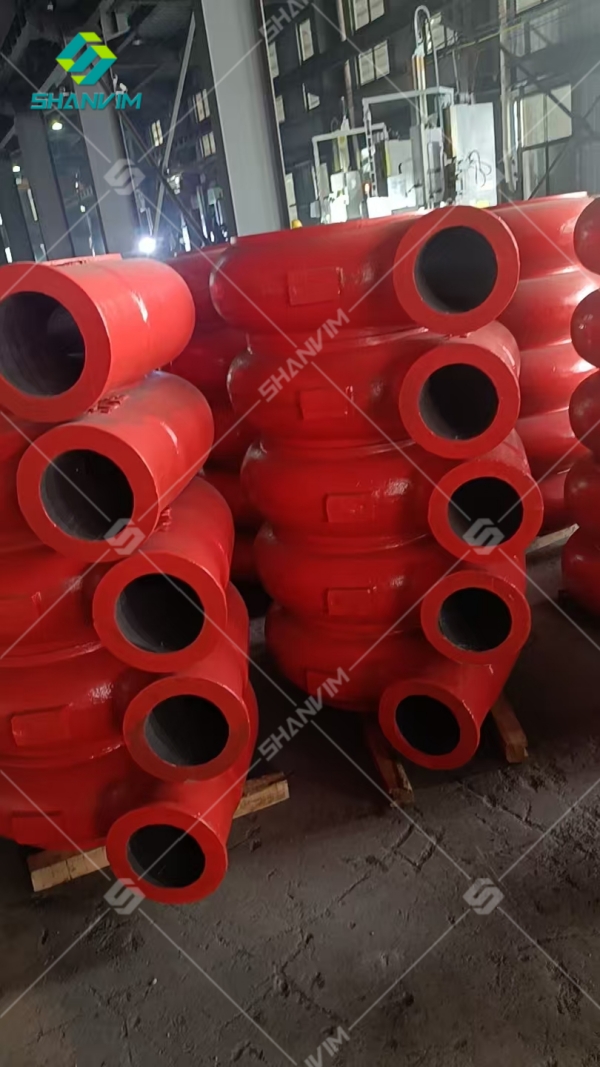
Many operators assume that when a pump housing cracks, erodes, or wears through, they must buy a complete new pump unit from an original manufacturer. That is not the case. SHANVIM produces the pump housing – the critical wear-resistant casing – not the complete slurry pump. This focus allows the company to deliver high-quality, precisely engineered housings that match or outperform original parts at a competitive cost and lead time.
Whether you have an original drawing, an old sample, or simply a set of on-site operating conditions, SHANVIM can reverse-engineer or custom-design a housing that fits your existing pump assembly perfectly.
Structure and Assembly Dimensions – Getting the Fit Right
The first and most critical step in customizing a slurry pump housing is defining its physical geometry and how it interfaces with the rest of the pump. A housing that does not fit correctly is unusable, no matter how strong the material is.
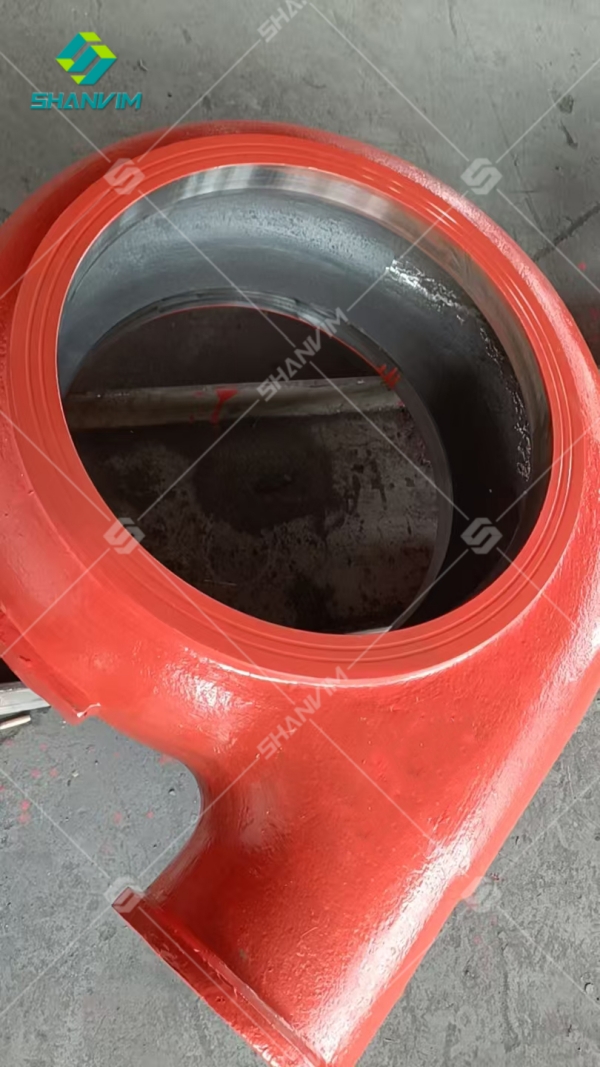
Key dimensional parameters SHANVIM typically requires include inlet and outlet flange dimensions such as bolt hole pattern, flange thickness, inner diameter, and sealing groove details. The volute chamber profile, which is the spiral cross-section that converts velocity into pressure, is also critical because even small deviations affect hydraulic efficiency. Mounting interface dimensions, shaft centerline height, split-line details with mating surface dimensions, and wall thickness distribution across the housing are all essential for a perfect fit.
If you do not have a full engineering drawing, SHANVIM can work from a worn sample or detailed field measurements. However, the more precise the dimensional data, the faster and more accurate the first sample will be.
Material and Process Requirements – The Science of Wear Resistance
Slurry pump housings do not fail by accident. They fail because the material cannot withstand the combined effects of abrasion, corrosion, and impact. Choosing the right material is therefore the most important technical decision in the customization process.
SHANVIM offers a range of wear-resistant alloys, and the selection depends entirely on your slurry characteristics. High-chromium white cast iron in the Cr26 to Cr28 range is ideal for highly abrasive slurries containing sand, gravel, or mineral ores, providing excellent hardness of HRC 58 to 65 and good corrosion resistance. Ni-hard, which is nickel-chromium cast iron, is suited for wet and abrasive conditions with moderate impact, often used in bottom ash and mill discharge applications. Duplex stainless steel is recommended when corrosion is as severe as abrasion, for example in chemical slurries or seawater applications. Manganese steel is for high-impact applications where the housing may be struck by large rocks or debris.
Beyond alloy selection, the casting process itself determines quality. SHANVIM uses precision sand casting and heat treatment to achieve the required hardness, toughness, and dimensional stability. Customers should specify required hardness in HRC or HB, typically 58 to 65 HRC for high-chromium housings. Impact resistance requirements measured in joules per square centimeter for applications with large solids, heat treatment specifications including annealing quenching and tempering parameters, non-destructive testing such as radiographic or dye penetrant inspection if required, and surface finish requirements especially on sealing faces and flange gasket surfaces should all be clearly communicated.
Core Performance Parameters – Matching Your Operating Conditions
Even with perfect dimensions and the best material, a pump housing will not perform well if it was not designed for your specific slurry dynamics. SHANVIM always asks customers to clarify the following operating parameters.
Slurry composition matters because it determines abrasiveness and corrosiveness. You need to specify whether you are pumping sand, ore tailings, coal ash, or chemical sludge. Solid particle size and shape affect minimum wall thickness and internal geometry, and sharp particles increase wear rate significantly. Solid concentration by weight is important because higher concentration leads to higher wear rate and may require thicker sections or harder alloys. Operating pressure in bar or psi determines required wall strength and flange rating. Operating temperature matters because high temperatures can soften certain alloys. PH level is critical because acidic or alkaline slurries require corrosion-resistant duplex or stainless grades. Flow rate in cubic meters per hour or gallons per minute affects internal velocity and wear patterns. Pump speed in RPM matters because higher speeds generate more erosion impact.
With these parameters, SHANVIM can not only select the correct alloy but also recommend structural optimizations, such as thicker wear zones, replaceable liners, or reinforced bolt bosses, to extend service life.
A Successful Custom Case: How It Works in Practice
A successful custom pump housing does not happen by accident. It requires close technical collaboration between the user and a professional foundry. SHANVIM, located in Jinhua, Zhejiang Province, is one such foundry with extensive experience in wear-resistant castings.
The company can produce pump housings and other wear parts based on drawings, samples, or specific on-site requirements. SHANVIM’s product portfolio covers a wide range of wear-resistant materials, enabling targeted material solutions for different applications.
Here is a typical successful workflow. First, the customer provides operating parameters, existing part dimensions, or a worn sample. Second, SHANVIM’s engineers recommend the optimal alloy based on slurry type, particle size, and PH level. Third, if the original housing had a weak point such as repeated cracking at a bolt boss, SHANVIM redesigns that area for better strength. Fourth, tooling is created based on final approved drawings. Fifth, the housing is cast, heat-treated to target hardness, and cleaned. Sixth, quality inspection including dimensional check, hardness test, and if required, non-destructive testing is performed. Seventh, flange faces, sealing surfaces, and bolt holes are machined to precise tolerances. Eighth, the finished housing is delivered, ready for assembly.
What does this mean for you? When you provide detailed operating parameters and technical requirements to a professional manufacturer like SHANVIM, they can apply their material science knowledge and casting expertise to deliver a full-service solution from material selection and structural optimization to precision manufacturing. The ultimate goals are to extend equipment service life and reduce total operating costs.
Practical Checklist: What to Prepare Before Contacting SHANVIM
To ensure a quick and accurate quotation, please have the following ready. A drawing or sample, any existing documentation or physical part. The pump model or identification if known. A slurry description including what is being pumped, at what concentration, and with what particle size. Operating pressure and temperature, approximate values are acceptable. Desired service life to help SHANVIM balance first cost versus long-term durability. Annual quantity which influences optimal tooling method and pricing.
Final Word: Customization Is a Partnership
A custom slurry pump housing is not a standard product pulled from a shelf. It is an engineered solution. And the success of that solution depends equally on the quality of the information you provide and the technical capability of the foundry you choose.
SHANVIM does not manufacture complete slurry pumps. The company produces pump housings – the critical wear part that determines how long your pump stays in service. By focusing exclusively on housings and other wear-resistant castings, SHANVIM has developed deep expertise in material selection, precision casting, and structural optimization.
About SHANVIM
Located in Jinhua, Zhejiang Province, SHANVIM specializes in the production of wear-resistant castings, including slurry pump housings, jaw plate,mantle,blow bar,hammer, and other heavy-duty components. The company works directly with end users and pump rebuilders to provide custom-engineered parts based on drawings, samples, or field conditions. For more information or to request a quotation, please contact SHANVIM with your operating parameters and dimensional requirements.
Post time: Jun-04-2026