
Optimized Equipment Configuration for Iron Ore Crushing Lines – Achieving 300–400 t/h Capacity
As global industrialization continues to accelerate, iron ore remains one of the most critical raw materials for the steel industry. From infrastructure construction to machinery manufacturing, steel products are embedded in nearly every aspect of modern life. With demand for steel rising steadily across both developed and emerging economies, the need for efficient, reliable, and high-capacity iron ore processing solutions has become increasingly urgent. For mining companies and plant operators, designing a fixed crushing line that consistently delivers 300–400 tons per hour is a strategic business decision that directly affects production costs, product quality, energy consumption, and long-term profitability.
This article provides a practical overview of the essential equipment required for a fixed iron ore crushing line in this capacity range, highlighting critical selection parameters, configuration strategies, and features that enhance uptime, reduce maintenance, and ensure stable output.
1. Vibrating Feeder – Ensuring Uniform Feed Flow
The vibrating feeder is the first piece of equipment in the crushing line and plays a vital role in determining the efficiency of all downstream processes. Its primary function is to draw run-of-mine iron ore from the storage hopper and deliver it evenly to the primary crusher. Uniform feeding is essential – an inconsistent feed rate causes fluctuating crusher loads, accelerates wear on jaw plates, reduces throughput, and can lead to unexpected downtime.
When selecting a vibrating feeder for a 300–400 t/h line, several technical parameters must be considered. Structural rigidity is paramount – heavy-duty steel frames and robust spring systems are necessary to absorb the impact of large ore lumps, which can often exceed 800 mm in size. The feed rate must be adjustable, typically via variable-speed motors or mechanical gating, allowing operators to fine-tune material flow according to real-time crusher load feedback. Many modern feeders also incorporate a built-in grizzly bar section, which pre-screens fines smaller than 80 mm before they enter the jaw crusher, bypassing the primary crushing stage for already-sized material and reducing unnecessary wear.
For high-tonnage operations, an automated control interface can be integrated into the feeder system, linking feeder speed to the crusher’s current draw. This closed-loop regulation prevents choke-feeding and minimizes material spillage, directly contributing to overall efficiency and reducing the need for manual intervention.
2. Jaw Crusher – The Primary Reduction Workhorse
The jaw crusher is the core of the primary crushing stage, responsible for reducing large run-of-mine ore – typically ranging from 600 mm to 900 mm – to a more manageable size of approximately 150–250 mm. For a fixed line targeting 300–400 t/h, the jaw crusher must combine a large feed opening, high eccentric shaft speed, and a deep crushing chamber to achieve the required volumetric capacity.
Beyond nominal throughput, several other selection criteria are equally important. Closed Side Setting (CSS) adjustability is critical – modern hydraulic CSS adjustment systems allow operators to quickly compensate for jaw plate wear and modify the product size without manual shim replacement, reducing adjustment downtime from hours to minutes. A well-engineered toggle plate acts as a mechanical fuse, breaking under extreme overload to protect the crusher frame when tramp metal or oversized boulders enter the chamber. Jaw plate profiles also matter – corrugated or toothed designs improve material grip and promote inter-particle comminution, enhancing the reduction ratio.
Advanced jaw crushers now incorporate load-sensing hydraulic systems that continuously monitor main bearing temperatures and oil pressure, providing early warnings of potential failures. This predictive maintenance capability, combined with a robust lubrication circuit, ensures the primary crusher remains a reliable anchor for the entire production line.
3. Cone Crusher – Achieving Final Product Specifications
After primary reduction, the material stream enters the cone crusher stage. Cone crushers are typically deployed as secondary or tertiary crushing equipment, responsible for reducing the material to the final particle size required for downstream beneficiation or direct sale. In a 300–400 t/h fixed line, one or two cone crushers may be used depending on the desired product gradation and ore hardness.
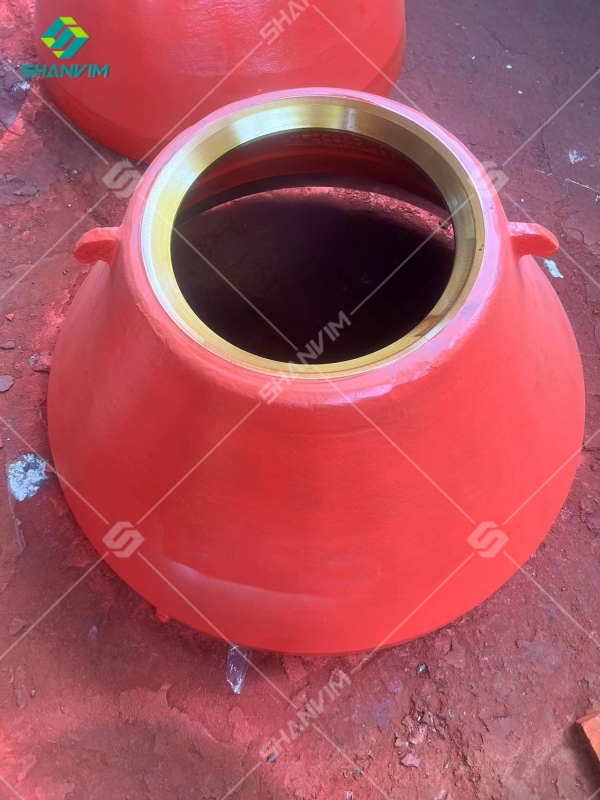
Several factors must be evaluated when selecting a cone crusher. Chamber design is fundamental – standard coarse chambers suit secondary crushing, while fine or short-head chambers are used for tertiary reduction to produce smaller sizes, often below 40 mm. A hydraulic release system provides automatic overload protection by clearing tramp iron and preventing material packing, allowing the crusher to restart under full load – a decisive advantage for continuous operations. Liner wear life is another major consideration – manganese steel liners with optimized wear profiles can significantly extend replacement intervals, reducing cost per ton.
For high-capacity lines, automated setting systems adjust the mantle-to-bowl distance in real time based on power draw and feed size analysis, ensuring consistent product shape and reducing recirculating loads. An automatic discharge system further enhances operational continuity, while a dust suppression spray ring at the feed inlet helps minimize airborne fines, improving workplace safety and environmental compliance.
4. Vibrating Screen – Precision Classification for Quality Control
Screening is the quality control gatekeeper of the crushing line. After secondary or tertiary crushing, the material must be separated into multiple size fractions – typically 0–5 mm, 5–15 mm, 15–30 mm, and plus 30 mm, with oversize returned to the cone crusher for further reduction. For a 300–400 t/h operation, the screening equipment must handle high feed rates without blinding or carryover.
Advanced screening features that enhance performance include multi-deck configurations, typically three or four decks, each fitted with appropriate screening media such as woven wire cloth, polyurethane panels, or rubber materials. High G-force exciters generate accelerations of up to 6 G, ensuring efficient material stratification even with moist or clayey ores. Self-cleaning mechanisms, such as ball trays or bouncing rings beneath each deck, prevent blinding and maintain screening efficiency over extended periods.
Modern vibrating screens are designed for easy deck change-out and adjustable slope angles, allowing operators to fine-tune separation efficiency. When paired with a recirculation conveyor returning oversize material to the cone crusher, the screening stage completes a closed-circuit loop, maximizing product yield and minimizing over-grinding.
5. Conveying Equipment – The Arterial Network of the Production Line
Conveyors interconnect all stages of the crushing line, from the feed hopper to the final product stockpile. In a fixed 300–400 t/h line, the conveying network typically spans 150 to 300 meters and includes belt conveyors, transfer chutes, and occasionally bucket elevators for vertical lifts. The reliability of this system directly affects production continuity.
Key engineering considerations include belt width and speed – for 400 t/h handling iron ore with a bulk density of approximately 2.4 t/m³, a belt width of 1,000 to 1,200 mm running at 1.5 to 2.0 m/s is standard. Deeper trough angles of 35° to 45° increase carrying capacity. Gear motors with soft-start controls reduce stress during start-up, while variable-frequency drives allow speed modulation to match upstream feed variations.
Safety and monitoring systems are essential – belt sway switches, speed sensors, and pull-cord emergency stops are mandatory. For advanced setups, belt rip detectors and bearing temperature probes can trigger alarms or automated shutdowns, preventing catastrophic failures. Dust enclosures at transfer points and robust scraper cleaners prevent carryback, reducing material loss and maintenance frequency. Radial stacking conveyors offer flexible piling for improved load-out efficiency.
System Integration and Operational Efficiency
Individual equipment performance is necessary, but true efficiency comes from seamless system integration. A 300–400 t/h fixed line requires a central control system capable of monitoring all equipment in real time. Programmable Logic Controllers (PLCs) collect data from crusher load cells, screen motor currents, conveyor weighbridges, and feeder drive frequencies, enabling remote parameter adjustment or automated production stabilization.
Key integration principles include interlock protection – if the screen clogs or the cone crusher overheats, downstream conveyors stop in a cascading sequence while upstream feeders throttle down, preventing material pile-ups. Energy optimization is achieved by maintaining crushers at full chamber load without overloading, minimizing specific energy consumption in kWh per ton. Condition monitoring data enables proactive maintenance scheduling, allowing liner changes, bearing replacements, and screen panel rotations during planned downtime rather than through unplanned stoppages.
Conclusion
Achieving sustained 300–400 t/h output from a fixed iron ore crushing line demands careful attention to equipment compatibility, configuration, and operational discipline. From the vibrating feeder that ensures uniform material flow, to the jaw crusher for primary reduction, the cone crusher for particle refinement, the vibrating screen for quality control, and the conveying system that ties everything together – each component must perform reliably and in harmony. With proper planning, rigorous selection, and disciplined operation, a 300–400 t/h fixed crushing line becomes a foundation for sustainable growth in the competitive iron ore market.
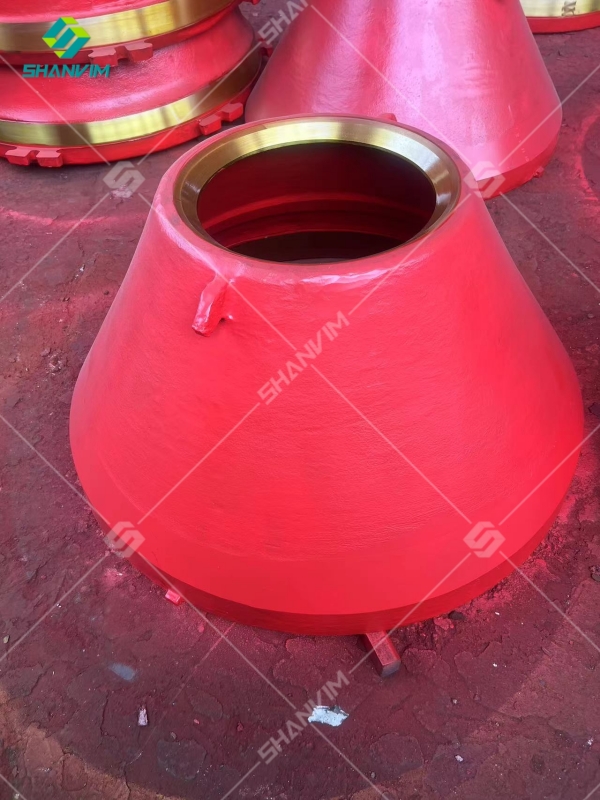
SHANVIM as a global supplier of crusher wearing parts, we manufacture cone crusher wearing parts for different brands of crushers. We have more than 20 years of history in the field of CRUSHER WEAR PARTS. Since 2010, we have exported to America, Europe, Africa and other countries in the world.
Post time: Jul-30-2026