
Why Is Zinc Alloy Poured When Installing Cone Crusher Mantle and Concave? — A Technical Deep Dive by SHANVIM
In the core components of a cone crusher, the mantle and concave serve as the primary wear parts directly involved in material crushing. The quality of their installation directly determines the operational stability and service life of the entire machine. For decades, the practice of pouring zinc alloy between the liner and the crusher body has been widely adopted in engineering practice. Behind this seemingly traditional approach lies profound engineering mechanics logic. As a dedicated player in the mining machinery field, SHANVIM provides a systematic analysis of the irreplaceable role of zinc alloy backing material in cone crusher installation and its technical principles.
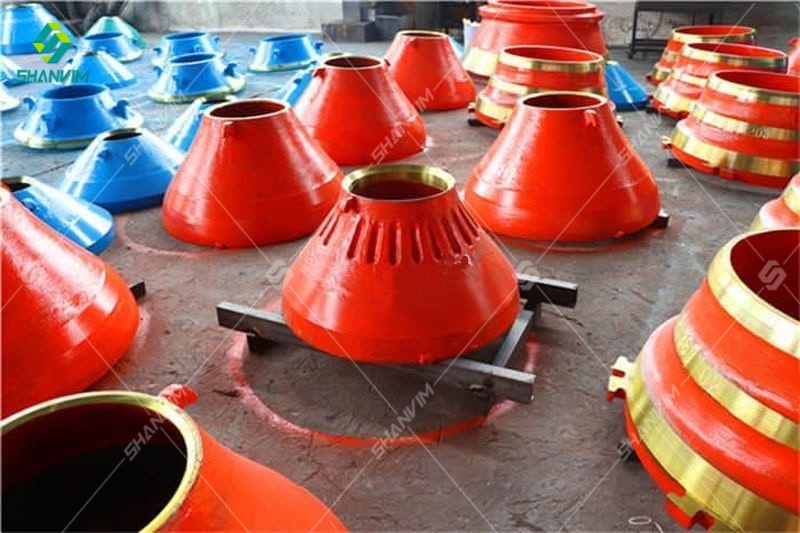
The Core Function of Zinc Alloy Backing: From “Filling” to “Load Bearing”
When installing the mantle and concave of a cone crusher, gaps inevitably exist between the backing surface of the liners and the cone body or adjustment ring. These gaps originate from casting tolerances, machining errors, and wear accumulated over time. If the liners were to make direct rigid contact with the crusher body, the contact area would typically be less than 60% of the design value. The high-frequency impact loads generated during crushing would then be unable to transfer uniformly, and localized stress concentration would rapidly cause liner cracking or even damage to the crusher body.
The core function of zinc alloy pouring is precisely to create a continuous, dense, high-strength supporting medium between the liner and the crusher body, bringing the contact area close to 100%. This alloy backing layer plays a critical role in uniform stress transfer, conducting impact forces from the crushing chamber’s working surface evenly to the cast steel body, thereby preventing localized overloading. U.S. Patent US2913189 explicitly stated that zinc alloy pouring can achieve uniform stress distribution, thereby minimizing the risk of main shaft fracture. This principle remains a cornerstone of cone crusher design to this day.
The Self-Locking Mechanism: Zinc Alloy’s “Hidden Skill”
Another important function of zinc alloy backing is often overlooked, yet it plays a key role in the long-term operation of the equipment. According to classic cone crusher design theory, after zinc alloy is poured, when the crusher operates for 6 to 8 hours, the zinc alloy layer causes the liners to tighten further, creating what is known as a “self-locking” effect.
The principle behind this effect lies in the fact that after the zinc alloy solidifies, it forms a tight mechanical interlock with both the liner and the crusher body. During the initial period of crusher operation, continuous impact vibration causes slight plastic deformation of the zinc alloy layer, filling any residual microscopic gaps and further enhancing the tightening force on the liners. Patent documents specifically emphasize that zinc alloy should not intrude into the locking thread area, as this would destroy the self-locking characteristics. In its technical practice, SHANVIM consistently maintains precise control of the zinc alloy pouring level to ensure the effectiveness of the self-locking mechanism.
Material Properties of Zinc Alloy: Why ZAMAK and Not Something Else
Zinc alloy backing materials typically use ZAMAK series alloys (such as ZAMAK 3 and ZAMAK 5), whose chemical composition is based on zinc with approximately 4% aluminum and trace amounts of copper and magnesium. This formulation is not an arbitrary choice but is based on strict engineering performance requirements.
From a mechanical properties perspective, ZAMAK alloys can achieve compressive strengths of 267 to 373 MPa and an elastic modulus of approximately 84 GPa, approaching the levels of certain cast irons. This means the zinc alloy backing can provide sufficient rigid support while possessing the necessary toughness to withstand impact. Its melting point range of 380 to 386°C is far below the melting point of the cast steel body, allowing the pouring process to be completed without damaging the crusher body due to temperature. Additionally, zinc alloy in the molten state exhibits excellent fluidity, capable of filling extremely narrow and complex gaps — an important advantage over alternative materials such as epoxy resin.
Key Control Points in the Pouring Process
Zinc alloy pouring is not a simple “melt and pour” operation but a process system requiring precise control. SHANVIM’s technical team points out that the preheating stage before pouring is crucial: the cone body and liners must be preheated to 60 to 80°C (some processes require higher temperatures) to thoroughly remove surface moisture. Any residual moisture contacting molten zinc alloy will trigger violent volumetric expansion (molten zinc expands more than 150 times in volume upon contact with water), causing explosive splashing accidents.
Pouring temperature also requires strict control. Zinc alloy must be heated to 540 to 590°C before pouring, and must not exceed 600°C, to avoid burning loss of alloy components and grain coarsening. After pouring is completed, fasteners typically need to be re-tightened after 6 to 8 hours of equipment operation to compensate for the slight loosening caused by zinc alloy cooling shrinkage.
Zinc Alloy vs. Epoxy Resin: The Continuing Evolution of Technical Approaches
In recent years, epoxy resin-based backing materials have gradually entered the market as an alternative to zinc alloy. Epoxy resin is applied at room temperature, avoiding the safety risks of high-temperature operations, and has a lower curing shrinkage rate (typically less than 0.5%, compared to approximately 1 to 1.5% solidification shrinkage for zinc alloy). However, zinc alloy has an incomparable advantage in high-temperature stability: its working temperature range can withstand molten-state pouring above 380°C, with no risk of aging at normal equipment operating temperatures; while the long-term working temperature limit for epoxy resin is typically only 120 to 150°C.
SHANVIM believes that zinc alloy and epoxy resin are not in a simple substitution relationship. Zinc alloy remains irreplaceable in large cone crushers (such as the PXZ series gyratory crushers) and high-temperature working conditions. Its rigid support characteristics and self-locking mechanism are difficult for epoxy resin to fully replicate. The choice of backing material should be based on a comprehensive assessment of equipment specifications, working conditions, maintenance capabilities, and safety requirements.
Conclusion
The zinc alloy pouring process in the installation of cone crusher mantle and concave is the crystallization of decades of engineering wisdom in the mining machinery field. It is not merely a “filling” method but a systematic technical solution integrating uniform stress transfer, self-locking fixation, and full-surface support. SHANVIM has always been committed to continuous improvement on this fundamental process, providing customers with more reliable and more durable cone crusher wear parts solutions through strict material selection, precise process control, and innovative installation approaches. In today’s mining operations, which increasingly pursue efficiency and safety, a deep understanding and correct execution of this “classic process” remains irreplaceable in value.
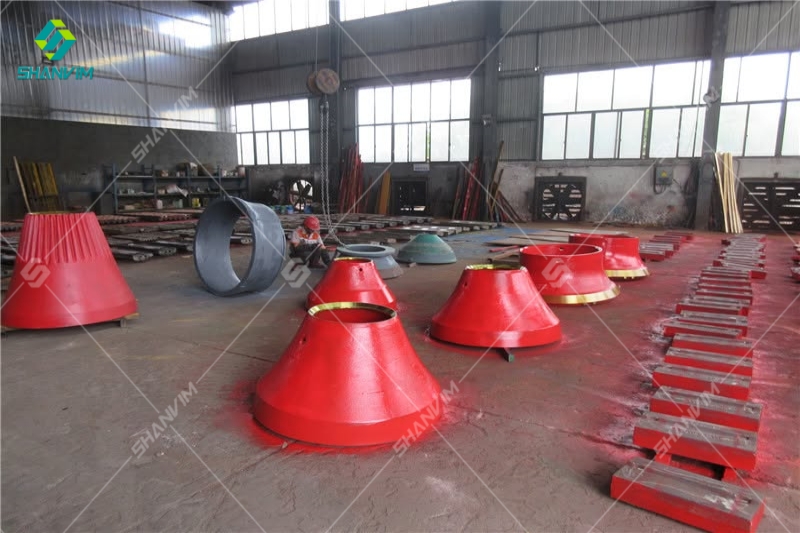
SHANVIM as a global supplier of crusher wearing parts, we manufacture cone crusher wearing parts for different brands of crushers. We have more than 20 years of history in the field of CRUSHER WEAR PARTS. Since 2010, we have exported to America, Europe, Africa and other countries in the world.
Post time: Oct-10-2026