
Core distinction: Toughness matrix vs. hard wear-resistant phase
High manganese steel (such as the common ZGMn13) and high chromium cast iron represent two different approaches to wear resistance:
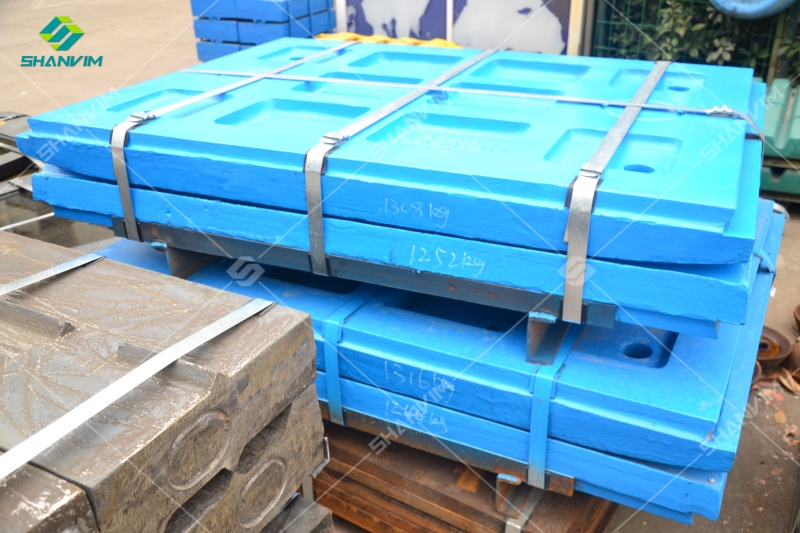
High manganese steel: This is a wear-resistant steel. It primarily relies on its high toughness and high-strength austenitic matrix to resist wear. Its characteristic is that the initial hardness is not high, but during operation, when subjected to strong impact or compression, the surface layer undergoes significant “work hardening,” leading to a substantial increase in hardness, thereby adapting to wear. Therefore, it is particularly suitable for working conditions involving high impact loads and high stress, such as in large jaw crushers used for breaking hard materials.
High chromium cast iron: This is a wear-resistant alloy. Its wear resistance mainly comes from a large number of hard carbide wear-resistant phases (such as Cr7C3) within its structure. It has extremely high initial hardness and excellent wear resistance, but its downside is poor toughness. Consequently, it is more suitable for working conditions with minimal impact and dominated by abrasive wear, such as crushing medium-hard materials or serving as the working layer of composite jaw plates.
In simple terms, when facing significant impact, priority should be given to the toughness of high manganese steel to ensure safety. In continuous wear conditions, the hardness of high chromium cast iron can demonstrate a longer service life.
How to scientifically select materials: Provide key working condition parameters
To choose the most suitable jaw plate, one cannot simply ask about the material. Instead, it is necessary to provide the supplier with specific working condition parameters for professional matching. The key information you need to prepare includes:
Characteristics of the crushed material: The type of material (e.g., granite, river pebbles, limestone), compressive strength, maximum feed particle size, and content of mud and moisture.
Equipment information: The specific model and specifications of the jaw crusher.
Operating parameters: The equipment’s hourly processing capacity (tons/hour), the current discharge opening size, and the current service life of the moving and fixed jaw plates.
Wear history: If jaw plates have been replaced before, please specify the specific type of material used previously (e.g., standard Mn13 or others) and its average service life.
Solutions from professional casting enterprises
Based on the above principles, professional casting enterprises like SHANVIM in Zhejiang can provide users with diverse material solutions, not just a single material.
For high-impact working conditions: They can provide modified high manganese steel jaw plates (e.g., Mn13Cr2, Mn18Cr2). By adding elements like chromium and molybdenum and performing optimized water toughening treatment, the initial hardness and yield strength are improved, extending service life while ensuring safety.
For high-wear, medium-to-low impact working conditions: They can provide jaw plates made of high chromium cast iron or high-vanadium high-speed steel. These materials, with their numerous and hard high-hardness carbide wear-resistant phases, may exhibit better wear resistance than high manganese steel under suitable working conditions.
For complex and harsh working conditions: An advanced solution is to use bimetallic composite casting technology. For example, high chromium cast iron is used as the working surface and metallurgically bonded with a high-toughness cast steel matrix to form an integrated structure. This design gives the jaw plate working surface extremely high hardness and wear resistance, while the back retains sufficient toughness to withstand impact. This results in a significant improvement in overall performance, and the service life can be several times that of traditional high manganese steel parts.
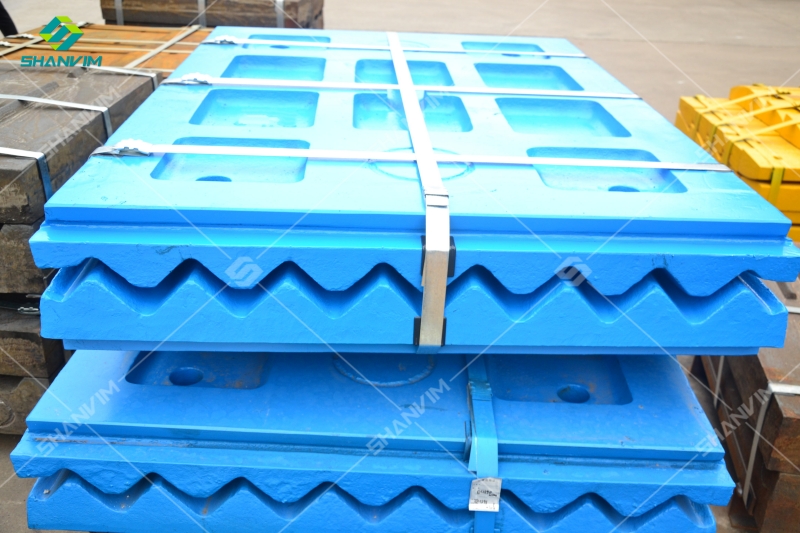
SHANVIM as a global supplier of crusher wearing parts, we manufacture cone crusher wearing parts for different brands of crushers. We have more than 20 years of history in the field of CRUSHER WEAR PARTS. Since 2010, we have exported to America, Europe, Africa and other countries in the world.
Post time: Feb-09-2026