
Understanding the Role of Crusher Liners: Why Wear Resistance Matters
Crusher liners are protective components installed inside key crushing equipment, including jaw crushers, cone crushers, and impact crushers. Their primary functions are to shield the crusher’s core components (such as the crushing chamber and rotor) from wear and tear, control the size and shape of the final product, and extend the overall service life of the equipment. Without high-wear-resistant liners, crushers are prone to premature failure, frequent maintenance, and reduced production capacity.
According to industry data, the average service life of a low-quality liner ranges from 3 to 8 weeks in high-abrasion applications, while a high-quality, properly selected liner can last 12 to 20 weeks or longer. For a medium-sized mine processing 10,000 tons of ore per day, each unscheduled liner change can result in $10,000 to $50,000 in lost revenue due to downtime. This underscores the importance of selecting liners that are engineered for wear resistance and tailored to specific operational conditions.
Key Factors to Consider When Selecting High-Wear-Resistant Crusher Liners
1. Analyze the Crushing Application and Material Characteristics
The first step in selecting the right liner is to thoroughly understand the application and the materials being crushed. The abrasiveness, hardness, and particle size of the feed material are the most critical factors determining liner wear. For example, soft materials like limestone and bluestone require less wear-resistant liners, while hard, abrasive materials like granite, basalt, and iron ore demand liners with superior wear resistance. The Mining Ore Abrasion Index (AI) is a key metric to quantify the abrasiveness of the material—high-silica ores like quartz have a high AI and require liners with enhanced wear properties.
Additionally, the type of crusher (jaw, cone, impact) and its operational parameters (crushing speed, feed size, discharge port setting) influence liner selection. Cone crushers, for instance, use concave and mantle liners, while jaw crushers use fixed and swing jaw plates, each requiring different wear characteristics. Wet or sticky materials, such as clay and mudstone, can cause liner clogging, so liners with grooved designs or special alloy compositions are recommended to prevent material buildup.
2. Choose the Right Liner Material
Liner material is the foundation of wear resistance, and the market offers a range of options tailored to different applications. The most common materials include:
High Manganese Steel (Mn13, Mn18Cr2): The most widely used liner material, accounting for 62% of the market, due to its unique work-hardening property. When subjected to impact, the surface of manganese steel hardens (reaching HB550 or higher) while the core remains ductile, preventing shattering. It is ideal for high-impact applications with medium abrasiveness, such as limestone and iron ore crushing. Modified high manganese steel (ZGMn18Cr2) offers enhanced impact toughness (up to 180J/cm²) and wear resistance.
High Chromium Cast Iron (BTMCr15, BTMCr26): Known for its exceptional abrasion resistance, high chromium cast iron contains 14-30% chromium, forming hard M₇C₃ carbides that resist cutting and wear. Its surface hardness can reach HRC58 or higher, making it suitable for hard, abrasive materials like granite and quartz. However, it is less ductile than manganese steel and may crack under high impact, so it is best used in low-impact, high-abrasion applications.
Composite Materials: Dual-metal composite liners and titanium carbide (TiC) composite liners combine the best of both worlds—hard wear-resistant surfaces and ductile cores. Dual-metal liners have a high-chromium working surface and a manganese steel core, achieving surface hardness of HRC62-65 and impact toughness of 30J/cm² or higher. TiC composite liners are ideal for extremely hard materials like iron ore and copper ore, reducing unit wear rate by up to 47% compared to conventional materials.
Alloy Steel: Suitable for wet, sticky materials, alloy steel liners often feature discharge chutes to prevent clogging and are engineered for corrosion resistance in harsh environments.
3. Evaluate Liner Design and Manufacturing Process
Even the best material will underperform if the liner design is poor. High-wear-resistant liners should have a design that optimizes material flow, reduces friction, and distributes wear evenly. For example, lamination crushing profiles are increasingly popular for hard materials like granite, as they create a protective layer of material that reduces direct wear on the liner surface. Wave-shaped or wedge-shaped crushing chambers can also improve particle crushing efficiency and extend liner life.
The manufacturing process is equally important. High-quality liners are produced using advanced casting techniques, such as no-bake sand casting or lost-foam casting, followed by heat treatment (solution heat treatment, water toughening) to enhance hardness and toughness. Automated casting control systems ensure consistent chemical composition—for example, reducing carbon equivalent fluctuation to ±0.05% to improve casting density. Non-destructive testing (UT/MT) is also critical to detect internal defects that could lead to premature failure.
4. Consider Compatibility and OEM Specifications
Liners must be compatible with the crusher model and OEM specifications to ensure proper fit and performance. It is essential to check the crusher brand and model (e.g., Sandvik CH 660, Metso HP 300) and verify the part number in the OEM manual. For non-OEM liners, ensure that the dimensional tolerance meets industry standards to avoid installation issues, such as loose fitting or misalignment, which can accelerate wear and cause equipment damage.
5. Balance Cost and Performance
While it may be tempting to choose the cheapest liner option, this often leads to higher long-term costs due to frequent replacements and downtime. The goal should be to select liners that offer the lowest cost per ton crushed, not the lowest initial purchase price. A case study from Hanson Kulnura, an Australian aggregate quarry, demonstrates this principle: after switching to customized liners with optimized profiles, the quarry extended liner life from 3-4 weeks to 15 weeks (with an additional 5 weeks of potential life remaining), significantly reducing downtime and maintenance costs.
Innovations Shaping High-Wear-Resistant Liner Technology
The crusher liner industry is undergoing rapid innovation, driven by the need for greater efficiency, durability, and sustainability. One key trend is the adoption of epoxy resin technology for liner installation, replacing traditional high-temperature zinc alloy or cement casting. Epoxy resin allows for room temperature operation, 24-hour curing, and reduces installation time by 80%, while eliminating toxic emissions and reducing energy consumption.
Intelligent monitoring is another game-changer. Smart liners equipped with piezoelectric sensors can real-time track wear status and load distribution, enabling predictive maintenance and reducing unplanned downtime. German manufacturer Thyssenkrupp’s intelligent liners have a fault warning accuracy rate of 92%, reducing maintenance costs by 40%. In China, the adoption rate of such smart systems is expected to reach 15% by 2030, up from less than 2% today.
Gradient structure composite liners are also gaining traction, featuring a 1.2mm surface hardening layer (HV1250) and a ductile core, achieving “hard exterior and tough interior” performance. These liners reduce wear rates by up to 50% in high-abrasion applications, making them ideal for large-scale mining operations.
Expert Recommendations for Liner Selection
Industry experts emphasize the importance of a data-driven approach to liner selection. “Too many operators choose liners based on price alone, without considering the specific conditions of their operation,” says John Miller, a senior engineer at H-E Parts International. “The key is to conduct a thorough analysis of the material being crushed, the crusher’s operational parameters, and the total cost of ownership. Customized liners, tailored to the unique needs of each site, often deliver the best long-term value.”
For those unsure about the right liner choice, experts recommend working with reputable suppliers who offer material testing, customized design, and after-sales support. Suppliers should be able to provide certification of material composition, hardness testing reports, and case studies of similar applications.
Conclusion
Selecting high-wear-resistant crusher liners is a critical decision that impacts operational efficiency, maintenance costs, and profitability in mining and construction. By analyzing application conditions, choosing the right material, evaluating design and manufacturing quality, ensuring compatibility, and balancing cost and performance, industry professionals can select liners that extend service life, reduce downtime, and optimize crushing operations.
As technology continues to advance, innovations like composite materials, epoxy installation, and intelligent monitoring are making it easier than ever to select liners that meet the demands of even the harshest environments. By following the guidelines outlined in this guide, companies can make informed decisions that drive long-term success in an increasingly competitive industry.
For more information on crusher liner selection, contact industry experts or reputable suppliers to discuss your specific operational needs and find the optimal solution.
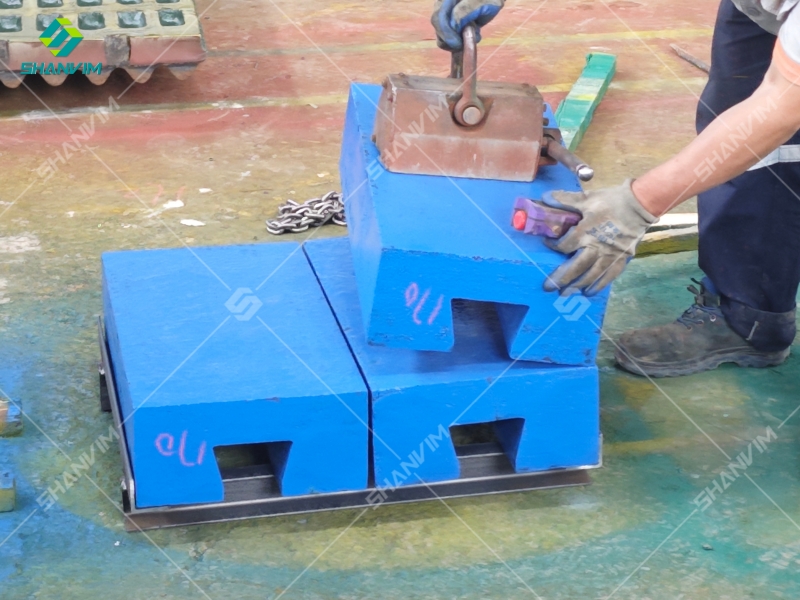
SHANVIM as a global supplier of crusher wearing parts, we manufacture cone crusher wearing parts for different brands of crushers. We have more than 20 years of history in the field of CRUSHER WEAR PARTS. Since 2010, we have exported to America, Europe, Africa and other countries in the world.
Post time: Apr-23-2026