
In the world of mining and construction, cone crushers are the workhorses that turn massive boulders into valuable aggregate. But ask any site engineer what keeps their operation running, and they will likely point to two pieces of steel: the mantle and the concave. These two components are the heart of the crushing chamber. Yet, for many newcomers to the industry, the difference between them remains a mystery. Today, we break down the distinct roles of the mantle and concave, and explain the fascinating mechanics of how they work together to crush rock.
Part One: Defining the Players
Before diving into the mechanics, it is essential to understand what each component is and where it lives inside the machine.
The Concave: The Stationary Bowl Liner
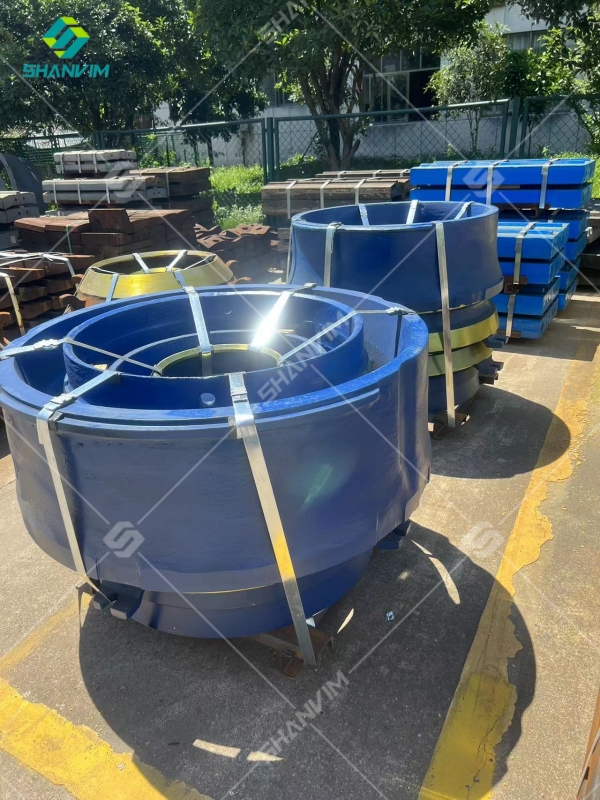
The concave, often referred to in technical drawings as the bowl liner or concave, is the stationary component of the crushing chamber. Imagine a large, steep bowl turned upside down—that is essentially the shape of the concave assembly. It is fixed firmly to the adjustment ring of the crusher frame and does not move.
Its inner surface is curved inward, creating a “crushing cavity” that wraps around the moving part. Because it is stationary, the concave acts as the outer wall of the chamber. It provides the solid, unyielding surface against which the rock can be crushed. Think of it as the anvil in a blacksmithing setup—it just sits there and takes the hit.
The Mantle: The Moving Crushing Head
The mantle, known as the cone liner or mantle, is the dynamic partner in this duo. It is wrapped around the main shaft of the crusher, also known as the moving cone. Unlike the concave, the mantle is in constant motion.
When the crusher is running, the main shaft gyrates (or wobbles) eccentrically. This means the mantle does not simply spin around; it moves in a circular pattern, swinging closer to and farther from the concave at any given moment. The mantle is the “hammer” in the system, delivering the crushing force to the rock.
Part Two: The Core Differences at a Glance
While they work as a team, their roles are opposites. Here are the fundamental distinctions:
Positioning: The concave sits on the outside, forming the chamber’s boundary. The mantle sits on the inside, acting as the rotating core.
Mobility: The concave is completely stationary. The mantle is dynamic and gyrates.
Function: The concave provides the stable pressure wall. The mantle delivers the crushing motion and force.
Wear Patterns: Due to their different roles, they wear differently. The upper area of the mantle often takes the brunt of the initial impact from feed material. The lower area of the concave usually experiences more wear as material is squeezed through the discharge gap.
These differences are not accidental; they are the result of careful engineering designed to maximize efficiency and wear life.
Part Three: The Working Principle – A Dance of Compression
Now that we know what the parts are, how do they actually crush rock? The process is often described as “layer pressing” or interparticle crushing.
1. The Gyratory Motion
The magic starts with the eccentric bushing. As the main shaft rotates, it does so off-center. This causes the mantle to perform a wobbling motion inside the stationary concave. At any single moment, the mantle is closest to the concave on one side of the chamber and farthest away on the opposite side.
2. The Crushing Cycle
This constant wobbling creates a continuous cycle of opening and closing gaps:
The Closing Stroke (Crushing): On the side where the mantle swings toward the concave, the gap narrows. Rock caught in this narrowing space is subjected to immense pressure. It is compressed between the two liners until it fractures. This is not a single impact, but a gradual squeezing force that is incredibly effective at breaking hard materials.
The Opening Stroke (Discharge): Simultaneously, on the opposite side, the mantle swings away from the concave. This widens the gap, allowing the crushed rock fragments to fall downward by gravity toward the next crushing zone or the final discharge opening.
3. Continuous Cascading
Because the gyratory motion happens hundreds of times per minute, the rock is constantly being crushed and released. As the material moves down through the chamber, it passes through multiple zones where this process repeats. Each cycle reduces the rock further until it is small enough to exit the bottom of the machine.
This continuous action is what gives cone crushers their high throughput and ability to produce a consistent, cubical product.
Part Four: Material Matters – Why High Manganese Steel?
Given that these components endure constant impact, high pressure, and severe abrasion, they cannot be made from ordinary steel. The industry standard is High Manganese Steel, typically grades like Mn13Cr2 or Mn18Cr2.
Why manganese? These steels possess a unique property known as “work hardening.” Under the intense impact of crushing rock, the surface of the steel becomes harder and harder, resisting wear, while the core of the material remains tough and ductile to absorb shocks. This allows the parts to essentially “self-sharpen” and last much longer than standard steel.
Part Five: Why This Knowledge Matters
Understanding the difference between the mantle and concave is not just academic; it has real-world implications for operational efficiency.
Matching Sets: Mantle and concave are designed as a set. If you replace one with a worn-out or mismatched profile from the other, the crushing chamber geometry changes, leading to poor product shape and lower efficiency.
Wear Monitoring: By knowing where each part wears (mantle top vs. concave bottom), operators can schedule rotations or replacements before a liner cracks, preventing costly damage to the expensive crusher body.
Aftermarket Quality: For procurement professionals sourcing these parts, knowing the specific terminology (Fixed Concave vs. Mantle) and part numbers ensures they order the right component. A mistake here can mean weeks of downtime waiting for the correct part to arrive.
Conclusion
The mantle and the concave may look like simple chunks of steel, but they are precision-engineered components with distinct personalities. One is the stationary anvil; the other is the moving hammer. Together, they perform a perfectly choreographed dance of opening and closing gaps that transforms solid rock into valuable aggregate.
For those in the mining and aggregate industries, respecting this dynamic duo is the first step toward mastering the art of crushing.
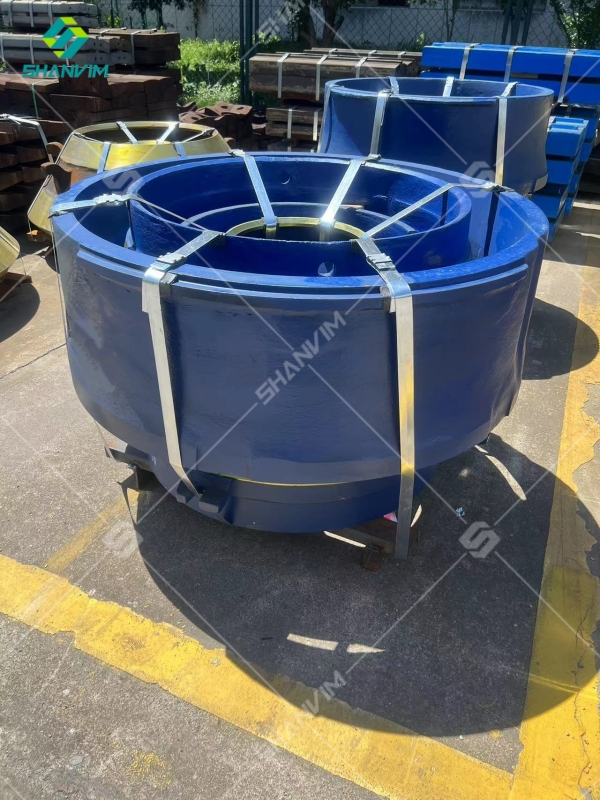
SHANVIM as a global supplier of crusher wearing parts, we manufacture cone crusher wearing parts for different brands of crushers. We have more than 20 years of history in the field of CRUSHER WEAR PARTS. Since 2010, we have exported to America, Europe, Africa and other countries in the world.
Post time: Mar-12-2026