
In-depth Analysis & Practical Solutions to Solve Rapid Wear of Cone Crusher Mantle and Concave
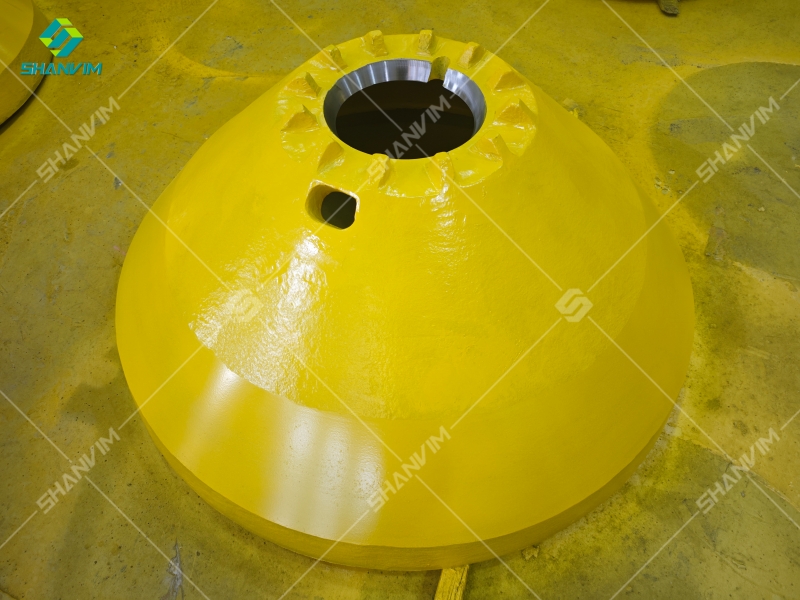
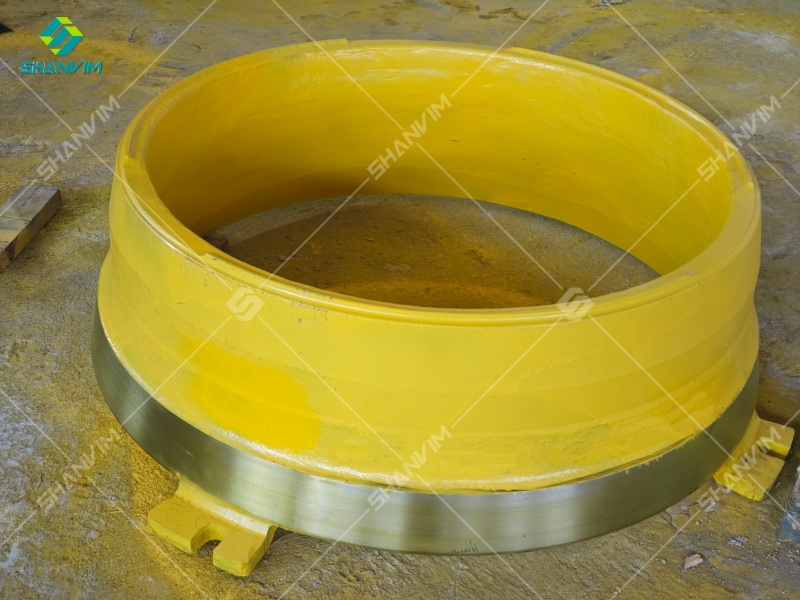
In the global mining, aggregate construction and ore processing industries, cone crushers have long served as core secondary and tertiary crushing equipment, undertaking the processing of high-hardness materials such as granite, basalt, iron ore and quartzite. Among all wearable components of cone crushers, mantle (movable cone liner) and concave (fixed cone bowl liner) are the most critical consumable parts. They directly bear continuous extrusion, impact and frictional abrasion between materials and equipment, and their service life directly determines production efficiency, maintenance cycle and overall operation cost of the entire crushing station.
Recently, a large number of feedbacks from mine operators, aggregate manufacturers and engineering contractors worldwide have pointed out a common industry pain point: mantle and concave wear too fast, with severely shortened replacement cycles, frequent shutdowns for parts replacement, sharp increase in spare parts procurement costs, and unstable material particle size and output caused by abnormal wear. Premature wear of liners has become a key bottleneck restricting the profitable operation of crushing enterprises.
This article comprehensively analyzes the core causes of rapid wear of mantle and concave from multiple dimensions including material characteristics, feeding operation, equipment parameter setting, component material selection and daily maintenance, and proposes targeted, implementable technical and management optimization solutions, providing clear guidance for global crushing users to reduce wear loss and control comprehensive costs.
1. Incorrect Crusher Settings
The most frequent cause of accelerated liner wear is improper closed side setting (CSS). A CSS that is too tight for the feed material forces the crusher to compress rock beyond its natural breakpoint. This generates extreme pressure on the liner surface, accelerating wear exponentially. Conversely, a CSS that is too open can cause the rock to tumble and slide against the liners rather than being crushed cleanly. This abrasive rubbing wears down manganese steel much faster than proper compression crushing.
Beyond CSS, main shaft rotating speed and crushing cavity type selection are also critical parameters. Many production sites blindly pursue high output, adopting excessively narrow discharge gaps and supercharged operating power, which makes the material compression ratio in the crushing chamber too large. The mantle and concave are in high-pressure contact for a long time, and the friction resistance increases exponentially. Too fast rotating speed will cause frequent collision between materials and liners, enhance impact wear, and easily lead to surface plastic deformation of wearable parts. In addition, mismatched cavity type and liner profile are also important hidden dangers. If the curved design of mantle and concave cannot fit the material crushing trajectory, the material cannot form effective laminated crushing, and most of the abrasion is concentrated on the local area of the liner, resulting in serious uneven wear and greatly reduced overall service life.
2. Oversized or Undersized Feed
Feeding material that is consistently too large for the crusher chamber creates a condition called “hanging” — large rocks get stuck above the crushing zone, grinding against the upper part of the concave without proper inter-particle crushing. This wears out the top section of the liners quickly while the lower section remains relatively new.
Undersized feed, especially fines, can be equally damaging. Excessive fine material acts like an abrasive paste, accelerating wear by preventing the rocks from forming a protective “rock-on-rock” crushing layer. Without this cushion, the liner surface is subjected to direct, continuous rubbing, wearing down the mantle and concave at a much faster rate than normal operation.
In addition, irregular feeding is a common on-site problem that cannot be ignored. Centralized feeding, eccentric feeding and uneven material grading will lead to one-sided stress on the crushing chamber. Local mantle and concave are continuously impacted and extruded by large-particle materials, forming regional excessive wear such as annular wear and banana-shaped wear. Meanwhile, excessive oversize materials mixed in feeding will produce strong impact load in the crushing gap, destroy the work hardening layer on the surface of manganese steel liners, and further aggravate fatigue wear and peeling damage.
3. Poor Liner Material & Casting Quality
At present, high manganese steel represented by ZGMn13 is the most widely used material for cone crusher mantles and concaves, which can form a dense work hardening layer under continuous impact to resist abrasion. However, many low-cost inferior spare parts on the market have unqualified alloy ratio, insufficient manganese and chromium content, and impure casting components. Such liners cannot complete effective work hardening in actual operation, and remain in a low-hardness ductile state for a long time, which is prone to rapid gouging wear.
For working conditions with high abrasion and high impact, ordinary high manganese steel can no longer meet the demand. High-grade alloy materials such as Mn18Cr2 and high-chromium alloy cast iron have higher overall hardness and impact toughness, which can increase the service life by 30% to 60% compared with traditional materials. In addition, inferior casting processes are easy to produce internal pores, sand holes and micro-cracks inside the liner. Under cyclic alternating stress, micro-cracks will continue to expand, causing early cracking and peeling of mantle and concave.
4. Improper Installation & Lack of Maintenance
Irregular daily maintenance and installation standards accelerate the aging and damage of liners. In the actual on-site operation, many enterprises lack standardized maintenance processes. The backing adhesive used for liner pouring is unqualified or constructed at too low ambient temperature, resulting in voids between the liner and the cone body. The liner cannot be closely attached, and slight shaking will occur during operation, resulting in friction and fatigue damage at the bottom.
Long-term overload operation and failure to timely remove unbreakable foreign matters such as iron blocks and steel bars mixed in materials will cause instantaneous overload and strong impact on mantle and concave, resulting in local collapse and fracture of liners. Moreover, most users lack regular wear detection and dynamic management mechanisms, only replacing liners after complete failure, ignoring the early warning of wear thickness change. Long-term delayed replacement will not only affect product quality, but also cause secondary damage to the crusher main equipment.
5. Targeted Solutions to Extend Liner Service Life
In view of the above core causes of rapid wear of mantle and concave, combining with on-site operation experience of global crushing projects and professional material engineering technology, the industry has summarized a set of systematic and efficient comprehensive solutions, covering material adaptation, operation optimization, part upgrading and maintenance management.
5.1 Optimize Feeding Management & Material Adaptation
First of all, classify and match liners according to ore characteristics. For high-hardness and high-abrasive working conditions, select high-manganese chromium alloy or high-chromium composite wear-resistant parts; for medium and low-hardness materials such as limestone, standard high manganese steel can be used to balance cost and performance.
Optimize the feeding system to realize uniform, continuous and central feeding, configure uniform feeding hoppers and buffer devices to avoid material segregation and eccentric accumulation. Strictly control the maximum feeding particle size to ensure that it matches the equipment design standards, and reduce the impact damage of oversize materials to the crushing chamber. Regularly screen and clean raw materials to reduce the mixing of impurities and unbreakable foreign matters.
5.2 Adjust Equipment Parameters & Cavity Matching
Adjust CSS and operating speed scientifically according to production demands, and avoid excessive compression and long-term overload operation. Select the matched crushing cavity type: use the coarse cavity for coarse crushing, and the fine cavity for fine crushing, to ensure that the material forms stable laminated crushing in the cavity and disperse the uniform abrasion of the liner.
Regularly check the running balance of the crusher main shaft, correct eccentric vibration in time, and reduce additional friction and vibration load of mantle and concave.
5.3 Upgrade Wear Parts & Quality Control
Abandon low-cost inferior accessories and prioritize OEM certified parts or high-quality standardized alternative parts with complete technical parameters. Popularize high-performance wear-resistant materials such as Mn14Cr2 and Mn18Cr2. For extreme working conditions, customized reinforced liners with local thickening and ceramic composite reinforcement can be adopted to enhance the wear resistance of key stress areas.
Strictly check the casting quality of liners, and reject products with pores, cracks and unqualified hardness to ensure stable mechanical properties in long-term operation.
5.4 Standardize Installation & Daily Maintenance
Formulate a perfect maintenance operation specification. Use high-quality high-temperature resistant backing compound for construction in a suitable temperature environment to ensure the close combination of the liner and the equipment matrix and eliminate internal gaps.
Establish a regular wear inspection mechanism, use special measuring tools to detect the wear thickness of mantle and concave every 150 to 200 working hours, and record data for life prediction. Implement regular liner rotation and position adjustment to realize uniform wear of vulnerable areas and delay overall scrapping time.
Timely lubricate the equipment, maintain stable operating conditions, and avoid liner damage caused by mechanical failure and equipment overheating.
Conclusion
At present, under the background of increasingly fierce market competition and rising raw material and labor costs, the refined operation of crushing equipment has become an inevitable trend for the sustainable development of enterprises. The rapid wear of mantle and concave is not only a simple part loss problem, but also a systematic management problem related to production efficiency, cost control and safety operation.
Industry data shows that through the comprehensive optimization of the above measures, the service life of cone crusher mantle and concave can be effectively extended by 40% to 80%, the number of shutdown maintenance can be reduced by more than 35%, and the annual comprehensive operation and maintenance cost of a single crushing line can be saved significantly.
In the future, with the continuous progress of new wear-resistant alloy materials, intelligent wear monitoring technology and optimized crushing cavity design, the wear resistance and comprehensive performance of cone crusher wearable parts will be further improved.
For global crushing and mining enterprises, only by accurately grasping the wear mechanism of mantle and concave, finding out personalized weak links combined with their own working conditions, and adopting targeted upgrading and management measures, can they fundamentally solve the problem of rapid wear, give full play to the efficient crushing capacity of equipment, and create greater economic benefits for enterprise production and operation.
SHANVIM as a global supplier of crusher wearing parts, we manufacture cone crusher wearing parts for different brands of crushers. We have more than 20 years of history in the field of CRUSHER WEAR PARTS. Since 2010, we have exported to America, Europe, Africa and other countries in the world.
Post time: Apr-28-2026