
How to Select the Right Jaw Plate Based on Material Hardness: Limestone, Granite, and Coal Gangue
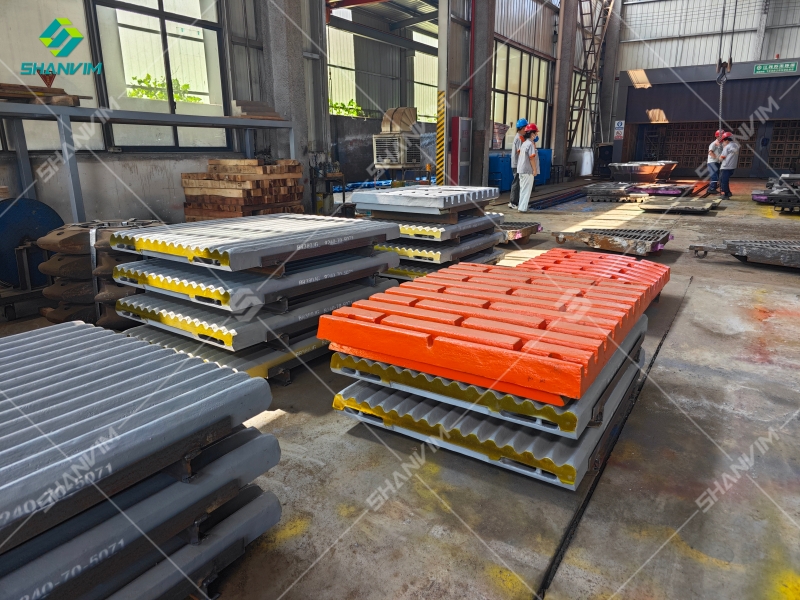
In the mining and aggregate industry, jaw crushers serve as the core primary crushing equipment for raw material processing. As the direct wear-resistant component that squeezes, impacts, and crushes raw stones, the jaw plate plays a decisive role in production efficiency, equipment stability, maintenance frequency, and overall operational costs. Improper selection of jaw plate material is the leading cause of premature wear, chipping, cracking, and frequent downtime. With years of professional experience in manufacturing high-quality crusher wear parts, SHANVIM summarizes targeted jaw plate selection guidelines based on the hardness and characteristics of three typical materials: limestone, granite, and coal gangue, helping global customers match optimal wear parts and reduce production costs.
Material hardness is the primary reference standard for jaw plate selection. In the mining industry, Mohs hardness is widely used to classify ore properties: soft materials (Mohs 1–3), medium-hard materials (Mohs 4–6), and high-hard abrasive materials (Mohs 7 and above). Different hardness levels lead to completely different wear mechanisms. Soft stone crushing mainly causes compressive wear; medium-hard ore brings dual impact and abrasive wear; high-hard stone with sharp mineral grains produces severe cutting wear on jaw plates. Apart from hardness, moisture content, mud content, feeding size, working load, and mixed iron impurities also affect the service life and operating status of jaw plates, which should be fully considered in model selection.
1. Jaw Plate Selection for Limestone (Mohs Hardness 2–3, Soft Material)
Limestone is one of the most common raw materials in the sand and gravel industry with low hardness and good crushability. Its wear form on jaw plates is dominated by continuous compression and friction, with minimal strong impact load. For conventional pure limestone crushing conditions, SHANVIM recommends standard Mn13 high manganese steel jaw plates.
The Mn13 high manganese steel features excellent work-hardening performance. Under continuous squeezing pressure from limestone, the plate surface quickly forms a dense hardened layer to resist compressive wear, while the matrix maintains outstanding toughness to avoid cracking and chipping. With cost-effective performance, Mn13 jaw plates perfectly meet the daily crushing demands of limestone production lines.
It is worth noting that some limestone mines contain flint and quartz nodules, which partially increase material hardness. For limestone mixed with hard quartz impurities, ordinary Mn13 jaw plates are prone to rapid cutting wear due to insufficient wear resistance. In this working condition, SHANVIM upgrades the matching solution to Mn13Cr2 alloy high manganese steel jaw plates. The added chromium element significantly improves anti-abrasion performance, stabilizes the hardened layer, and effectively extends the service life of jaw plates for impure limestone materials.
2. Jaw Plate Selection for Granite (Mohs Hardness 6–7, High-Hard Abrasive Material)
Granite is a typical high-hard rock with high silica content and sharp crystal particles. Crushing granite brings severe dual damage of strong impact wear and sharp cutting wear, which is one of the most harsh working conditions for jaw plates. Conventional Mn13 jaw plates are unable to adapt to long-term granite crushing; they wear rapidly and require frequent replacement, resulting in repeated production shutdowns and increased comprehensive operating costs.
For high-hard granite crushing scenarios, SHANVIM professionally recommends Mn18Cr2 alloy high manganese steel jaw plates. Compared with standard manganese steel, Mn18Cr2 adopts a higher manganese ratio to enhance the overall matrix toughness, effectively resisting strong impact from large granite materials and preventing edge chipping and plate fracture. Meanwhile, the chromium alloy component greatly improves anti-cutting and anti-abrasion capabilities, forming a thicker and more stable hardened layer to cope with continuous cutting friction caused by sharp granite particles.
For small-scale jaw crushers with small feeding particle size and low impact load, ultra-high manganese jaw plates are also optional. SHANVIM reminds all customers that high-hard alloy jaw plates have relatively lower toughness. It is necessary to install iron removal equipment on the production line to avoid plate cracking caused by accidental entry of iron blocks and metal impurities.
3. Jaw Plate Selection for Coal Gangue (Mohs Hardness 2–4, Unstable Material Properties)
Coal gangue is a common by-product of coal mining, with extremely unstable material properties. Most coal gangue is soft and easy to crush, while some coal gangue is mixed with a large amount of sandstone and quartz, leading to increased hardness and enhanced wear. In addition, coal gangue generally contains certain moisture and trace sulfur components, causing slight corrosive wear on jaw plates, which is easily ignored in daily selection.
For soft and pure coal gangue, standard Mn13 high manganese steel jaw plates can fully meet the crushing requirements with high cost performance. For coal gangue mixed with more quartz and sandstone impurities and aggravated wear, SHANVIM matches Mn13Cr2 alloy manganese steel jaw plates to improve overall wear resistance and adapt to complex and variable material conditions.
In addition, aiming at the humid and dusty working environment of coal gangue crushing, all SHANVIM jaw plates are precisely cast in strict accordance with original equipment drawings to ensure perfect fitting and installation accuracy. It effectively avoids abnormal loosening, vibration and fracture caused by assembly gaps, and improves the stability of continuous operation of the production line.
4. SHANVIM Professional Jaw Plate Selection Principles & Application Suggestions
Based on rich on-site service experience, SHANVIM summarizes a set of universal and efficient selection rules for jaw plates targeting different working conditions:
Soft materials with low impact (limestone, pure coal gangue): Adopt Mn13 high manganese steel jaw plates to achieve maximum cost performance.
Medium-hard materials with impurities: Adopt Mn13Cr2 alloy high manganese steel jaw plates to balance toughness and wear resistance.
High-hard materials with strong impact (granite, basalt): Adopt Mn18Cr2 alloy high manganese steel jaw plates for superior anti-impact and anti-cutting performance.
SHANVIM emphasizes that material hardness is only the basic selection index. Feeding size, crusher model, hourly output, and material impurity content must be comprehensively considered. Larger feeding particle size and higher production load require upgraded jaw plate alloy grades.
Many customers have a misunderstanding that blindly pursuing the highest hardness jaw plates can achieve a longer service life. In fact, the higher the hardness of the wear part, the lower the toughness. Matching ultra-high-hardness jaw plates for soft materials will not only increase procurement costs but also easily cause brittle fracture when encountering accidental impact, bringing greater production losses. The core of wear part selection is working condition matching, not blind high hardness.
5. Professional Wear Particles Solution from SHANVIM
As a professional manufacturer of crusher wear-resistant castings, SHANVIM focuses on the R&D and production of high-quality jaw plates, cone crusher liners, impact crusher blow bars, and other wear parts. Our products cover mainstream jaw crusher models such as C-series and CJ-series, with stable quality, precise dimensions, and long service life.
We provide one-stop customized selection services for global customers. According to your material test report, crusher model, feeding size, and production capacity requirements, our professional technical team will recommend the most suitable jaw plate solution to help you reduce replacement frequency, cut downtime loss, and lower the comprehensive tonnage production cost.
With the continuous upgrading of mining industry production standards, efficient and low-consumption wear parts have become an essential part of standardized production. If you are looking for reliable jaw plate replacement solutions, welcome to contact SHANVIM for professional technical consultation and quotation.
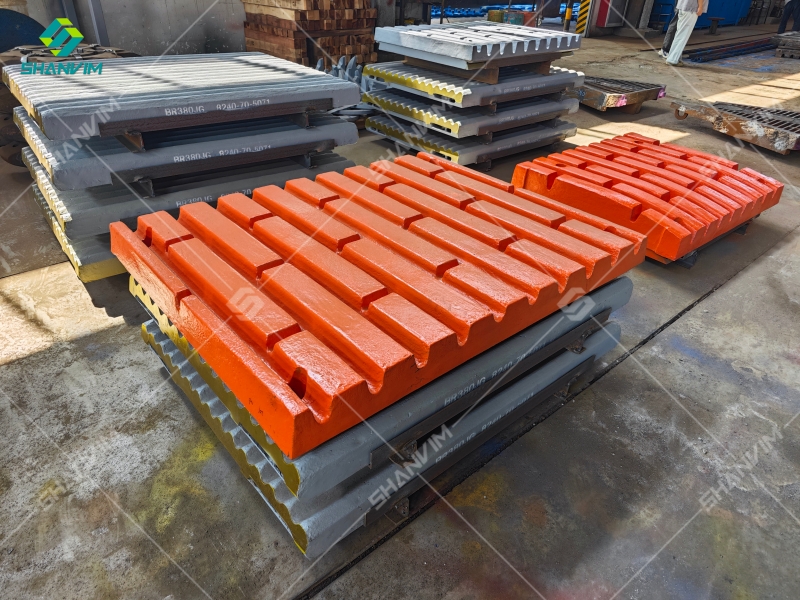
SHANVIM as a global supplier of crusher wearing parts, we manufacture cone crusher wearing parts for different brands of crushers. We have more than 20 years of history in the field of CRUSHER WEAR PARTS. Since 2010, we have exported to America, Europe, Africa and other countries in the world.
Post time: Sep-29-2026