
The key to reducing wear on sand making machine wear parts lies in optimizing equipment configuration, standardizing operating procedures, and implementing scientific maintenance. Below are specific measures:
I. Source Control: Material and Equipment Matching
1. Strictly Control Feed Material
– Particle Size: The feed size should not exceed the design limit of the equipment (e.g., impact sand makers typically require ≤50mm). Oversized rocks can directly impact core components.
– Hardness and Abrasiveness: Avoid crushing high-hardness (e.g., basalt) or high SiO₂-content materials. Conduct rock mineral analysis in advance if necessary.
– Moisture Content: Overly wet materials tend to adhere, increasing clogging and abnormal wear. Recommended moisture content: ≤10%.
2. Select Suitable Wear Part Materials
– Choose high-chromium alloy, tungsten carbide, ceramic composites, etc., based on material characteristics. For example:
– High-Chromium Cast Iron: Suitable for materials with low to medium abrasiveness.
– Tungsten Carbide Inserts: Suitable for highly abrasive materials (e.g., granite, basalt).
– Prioritize wear parts with wear-resistant layer designs and streamlined structures to reduce impact resistance.
II. Standardize Operations and Optimize Parameters
1. Maintain Stable and Continuous Feeding
– Avoid intermittent or empty running. Use a feeder for uniform material delivery to prevent rotor imbalance or component wear due to uneven loading.
2. Adjust Reasonable Operating Parameters
– Rotor Speed: Excessive speed increases wear, while insufficient speed reduces sand production efficiency. Adjust according to the equipment manual.
– Clearance Between Impeller and Liners: Regularly inspect and adjust to avoid excessive friction (if too small) or reduced efficiency (if too large).
3. Regularly Monitor Vibration and Abnormal Noises
– Abnormal vibrations may indicate rotor imbalance or loose components. Stop the machine immediately for inspection.
III. Systematic Maintenance and Care
1. Regular Inspection and Replacement
– Establish a wear part lifespan log and regularly shut down the machine to inspect wear conditions (e.g., replace throw heads when worn to 80% of their original weight).
– Replace rotor components in pairs or as a complete set to maintain dynamic balance.
2. Cleaning and Lubrication
– Clean accumulated materials promptly to prevent adhesion and accelerated wear.
– Lubricate bearings every 8 hours of operation using high-temperature lithium-based grease to prevent rotor misalignment due to bearing damage.
3. Upgrade Protective Measures
– Install replaceable wear-resistant liners in high-wear areas (e.g., feed pipes, crushing chambers).
– Consider installing online wear monitoring sensors to provide real-time warnings about critical component thickness changes.
IV. Technical Upgrades and Process Optimization
1. Optimize the Crushing Process
– Add a fine-crushing stage (e.g., cone crusher) before sand making to reduce feed particle size and lessen the load on the sand maker.
2. Select Advanced Equipment
– Choose equipment based on the “rock-on-rock” principle (e.g., vertical shaft impact crushers), which reduces metal consumption compared to “rock-on-iron” methods.
– Adopt frequency conversion speed regulation technology to dynamically adjust rotor speed based on material characteristics, balancing efficiency and wear.
Key Considerations
Avoid “Running with Faults”: Address minor issues promptly to prevent chain-reaction damage.
Train Operators Professionally: Ensure familiarity with equipment principles and safety protocols.
Choose Reliable Suppliers: Genuine or certified spare parts offer better compatibility and can extend lifespan by 20%–30%.
Through the comprehensive measures above, the service life of wear parts can be significantly extended (typically by 30%–50%), reducing the production cost per ton of sand and gravel. In practice, develop a specific maintenance plan based on the equipment model and working conditions.
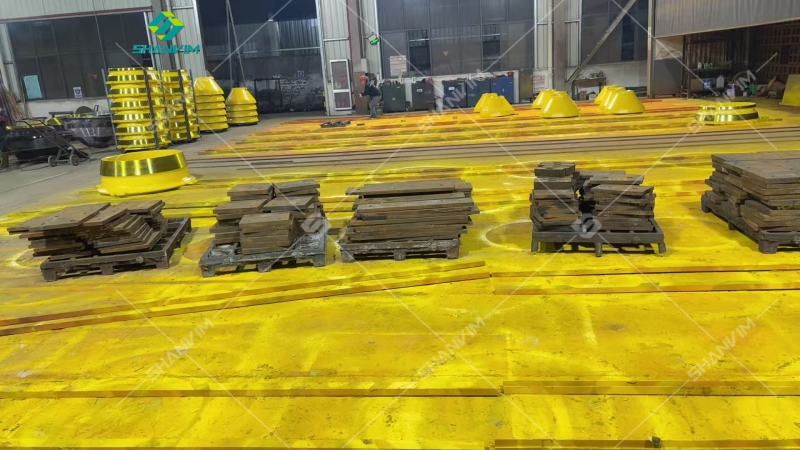
SHANVIM as a global supplier of crusher wearing parts, we manufacture cone crusher wearing parts for different brands of crushers. We have more than 20 years of history in the field of CRUSHER WEAR PARTS. Since 2010, we have exported to America, Europe, Africa and other countries in the world.
Post time: Jan-07-2026