
Regarding the question of “which material is better,” the answer is: there is no universally optimal material—the key lies in matching the specific operating conditions.

High Manganese Steel: The Traditional Choice for High-Impact Conditions
High manganese steel (e.g., Mn13Cr2, Mn18Cr2) is a time-honored wear-resistant material, with its core advantages being exceptional toughness and unique “work-hardening” properties. Under strong impact during crushing, its working surface hardness rapidly increases from an initial HB200 to over HB500, forming a hard, wear-resistant surface while the interior retains excellent toughness to resist fracture. Therefore, it is highly suitable for high-stress, high-impact conditions with large feed sizes, such as primary crushing in large-scale mining operations.
Alloy Steel: A High-Performance Option for Specific Conditions
Alloy steel (e.g., chrome-molybdenum alloy steel) typically offers higher initial hardness and better wear resistance. Under medium-to-low impact conditions or where wear is dominated by cutting or abrasion, it often outperforms high manganese steel. Its development addresses the drawback of high manganese steel, which fails to fully harden and thus underperforms in wear resistance under insufficient impact. However, for components subjected to severe impact, the superior toughness of high manganese steel remains irreplaceable.
Advantages Compared to Traditional Liners: Iterations in Materials and Technology
Compared to traditional liners, modern high-performance crushing walls excel primarily due to advancements in material science and structural design:
Material Hybridization: Moving beyond single materials. For example, the “bi-metal composite” process embeds high-chromium cast iron or other ultra-hard wear-resistant blocks into a high manganese steel base via composite casting. This combines a high-toughness matrix with an ultra-wear-resistant working surface, potentially extending service life by over 1.5 times.
Alloy Optimization: Adding elements like chromium (Cr) and molybdenum (Mo) to traditional high manganese steel creates modified or ultra-high manganese steels (e.g., Mn13Cr2, Mn18Cr2). These significantly refine the grain structure, enhancing both work-hardening capability and overall wear resistance.
Fundamental Differences Between High Manganese Steel and High Chromium Cast Iron
Wear Resistance Mechanism: High manganese steel relies on the work-hardening of its tough matrix under impact for wear resistance. High chromium cast iron relies on a high volume of ultra-hard carbide phases (hardness up to HV1200+) to directly resist abrasion.
Performance Characteristics: High manganese steel offers excellent toughness and strong impact resistance but has low initial hardness. High chromium cast iron provides high hardness and outstanding wear resistance but is brittle, less tough, and prone to fracture under unsupported conditions or strong impact.
Application Scenarios: High manganese steel is suited for high-impact conditions. High chromium cast iron is better for medium-to-low impact conditions where wear is primarily abrasive.
Solutions from a Professional Casting Enterprise:
Located in Jinhua, Zhejiang, ZHEJIANG JINHUA SHANVIM INDUSTRY AND TRADE CO., LTD. is a professional manufacturer of wear-resistant castings capable of providing mature solutions to all the above challenges. Based on specific operational parameters provided by users, the company can scientifically recommend and produce crusher mantles and bowl liners in various materials, including:
High Manganese Steel Series: e.g., Mn13, suitable for high-impact conditions.
Modified High Manganese Steel Series: e.g., Mn13Cr2, Mn18Cr2. By adding alloying elements, these enhance wear resistance while maintaining toughness, making them suitable for more demanding conditions.
Alloy Steel and High Chromium Cast Iron Materials: Meeting diverse impact and wear resistance requirements.
Utilizing various casting processes such as lost foam and resin sand molding, the company also accepts custom production based on provided drawings or samples, ensuring products perfectly match the equipment.
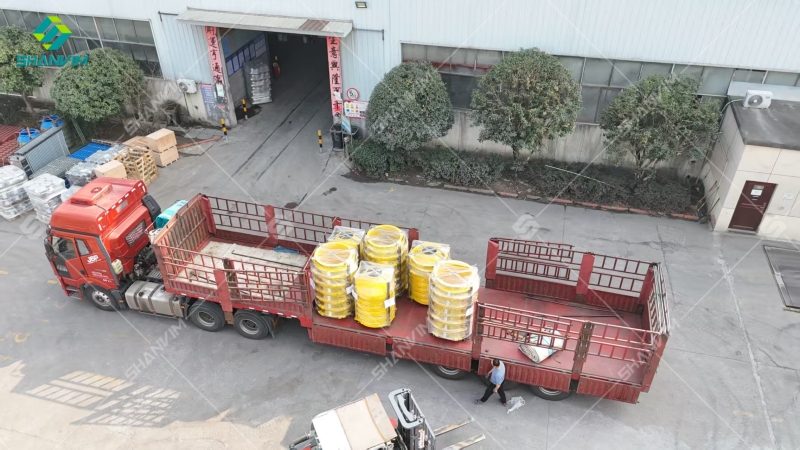
SHANVIM as a global supplier of crusher wearing parts, we manufacture cone crusher wearing parts for different brands of crushers. We have more than 20 years of history in the field of CRUSHER WEAR PARTS. Since 2010, we have exported to America, Europe, Africa and other countries in the world.
Post time: Dec-31-2025