
At the core of sand, aggregate, and metal mining crushing lines, the cone crusher functions like a powerful heart, continuously processing massive rocks into construction aggregates or mineral processing feed. Protecting this heart and directly enduring severe impact and wear are the Concave and the Mantle. For equipment managers, procurement engineers, or mine owners dealing with hard, abrasive materials like granite, iron ore, and river pebbles, two critical questions arise: “Is this Concave suitable for crushing these tough materials?” and “What is its actual service life?”
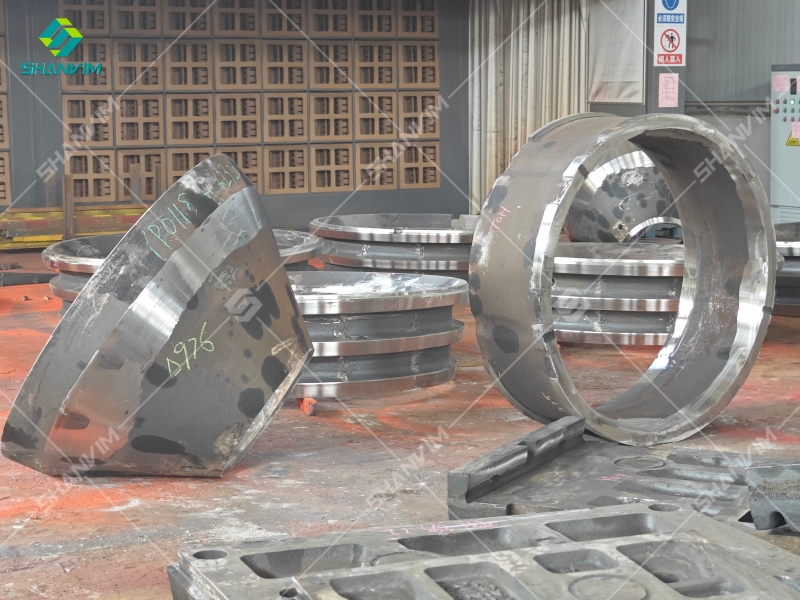
SHANVIM provides an in-depth analysis from technical, material, operational, and economic perspectives to address these key productivity and cost concerns.
Chapter 1: The Challenge – Understanding the Operating Environment and Material Characteristics
Assessing suitability requires understanding the harsh conditions and material properties.
1. Granite: Extreme Hardness and Abrasiveness
Characteristics: Mohs hardness 6-7, dense structure, high quartz content (Mohs hardness 7). Quartz is highly abrasive.
Impact on Concave: Crushing granite subjects the Concave to high compressive stress and micro-cutting wear. Quartz particles act like abrasive tools, scraping the liner surface. The Concave must have high surface hardness and excellent abrasion resistance.
2. Iron Ore: High Density and Combined Wear
Characteristics: High density (over 4.5 g/cm³), high impact energy. Often contains hard gangue minerals like quartz.
Impact on Concave: Besides abrasion, the Concave faces significant impact loads. High-density ore generates greater force during crushing, potentially causing fatigue cracks or deformation. The Concave needs good toughness to absorb impact while maintaining hardness.
3. River Pebbles: Tough and Abrasive
Characteristics: Typically quartzite or granite, rounded by water erosion but internally hard. Smooth shape increases sliding friction in the crushing chamber.
Impact on Concave: Pebbles cause sliding friction wear over large areas. This requires resistance to adhesive wear and stable surface hardening. Sand or silt carried with pebbles can form abrasive slurry, accelerating wear.
Conclusion: These materials are highly challenging for crusher wear parts. A Concave handling all three must balance high hardness, toughness, and fatigue resistance.
Chapter 2: Technology Solutions – Design of Modern High-Performance Concaves
How are modern Concaves designed for these challenges?
1. Material Advancements
Traditional Manganese Steel: Relies on work-hardening; may not perform optimally under medium/low impact.
Modern Materials: Current Concaves use medium-alloy steels, high-chromium iron composites, or specialized steels. Alloying elements (Cr, Mo, Ni, V) and advanced heat treatment provide high initial hardness (HRC 55-62+) and toughness for various conditions.
2. Design and Manufacturing
Profile Optimization: Computer-designed profiles promote inter-particle crushing, reducing direct liner wear and improving efficiency.
Advanced Processes: Lost foam casting ensures precise, defect-free castings. Proper heat treatment (quenching, tempering) enhances mechanical properties.
Core Answer #1: Applicability
Yes, high-performance Concaves are suitable for granite, iron ore, and river pebbles. Proper selection based on material characteristics (abrasion or impact-dominated) is essential.
Chapter 3: Lifespan Factors – Why Lifespan Ranges from 1.5 to 6 Months
Lifespan varies widely (1.5–6 months) due to multiple factors:
1. Material Properties (~40%)
Hardness, abrasiveness, moisture, clay content, feed size, and gradation significantly affect wear rates.
2. Operational Conditions (~30%)
Critical Settings: Proper discharge setting, feed rate, and choke feeding are vital. Incorrect settings cause rapid wear.
Maintenance: Crusher alignment, lubrication, and spring pressure impact liner life.
Production Demands: Higher output or finer product size increases wear.
3. Product Quality (~30%)
Correct material selection, high-quality casting, heat treatment, and optimal liner profile design determine performance and longevity.
Core Answer #2: Lifespan Dependency
Concave lifespan is not fixed; it depends on material, operation, and product quality. Under ideal conditions, 4–6 months is achievable. In harsh conditions, 1.5–2 months may be typical.
Chapter 4: Beyond Lifespan – Total Cost of Ownership
Focus on Cost Per Ton:
Cost Per Ton = (Concave Cost + Downtime Cost) / Total Tons Crushed
A higher-quality Concave may have a higher initial cost but lower cost per ton due to longer life and less downtime.
Benefits include consistent product gradation and reduced maintenance downtime.
Conclusion: The Right Partnership
Selecting a Concave should be a technical decision. SHANVIM offers site analysis, product recommendations, and technical support to optimize crushing efficiency and cost. With proper selection and operation, SHANVIM Concaves deliver maximum value and return on investment in challenging applications.
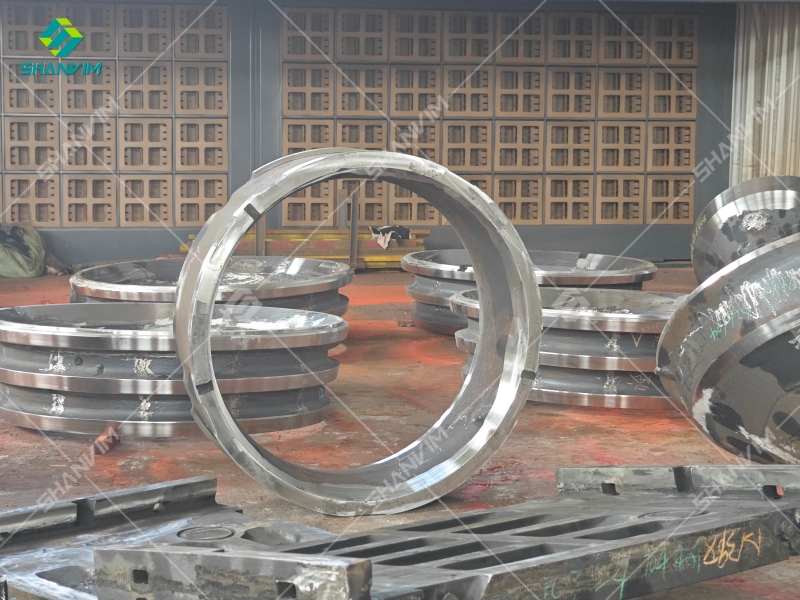
SHANVIM as a global supplier of crusher wearing parts, we manufacture cone crusher wearing parts for different brands of crushers. We have more than 20 years of history in the field of CRUSHER WEAR PARTS. Since 2010, we have exported to America, Europe, Africa and other countries in the world.
Post time: Jan-15-2026