
SHANVIM: Mastering the Critical Heat Treatments for Extended Jaw Plate Lifespan
In the demanding world of aggregate and mining processing, the jaw plate is the front line of defense. As the primary wear part of a jaw crusher, it endures immense compressive forces, heavy impact, and severe abrasion daily. For over 30 years, SHANVIM has been a global leader in manufacturing high-quality crusher wear parts, exporting to more than 30 countries. At the core of our expertise lies a deep understanding of metallurgy and heat treatment—the crucial processes that transform raw steel into durable, high-performance jaw plates capable of withstanding the toughest crushing applications.
The performance of a jaw plate is not determined solely by its chemical composition. Without a precise and carefully controlled heat treatment process, even the highest-grade steel will fail prematurely. The failure manifests as rapid wear, plastic deformation, or, most critically, brittle fracture. The science of heat treatment is the art of unlocking a material’s full potential, optimizing the delicate balance between hardness, toughness, and wear resistance. This article delves into the primary heat treatment processes employed by SHANVIM to ensure our jaw plates deliver superior performance and extended service life across various global crushing environments.
The Challenge: Why Heat Treatment is Paramount for Jaw Plates
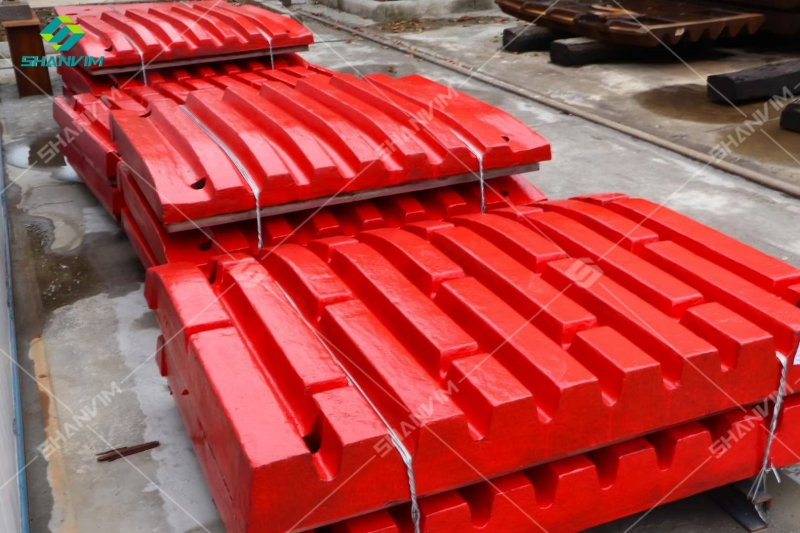
Jaw plates are the working surfaces of a jaw crusher, responsible for the initial breakdown of large rocks. Their working conditions are among the most severe in the processing industry . They are subjected to high-stress abrasion from hard, sharp rock fragments, heavy impact loads from falling feed material, and significant compression forces. Consequently, they experience high rates of wear and fatigue. For a jaw plate to be effective, it must possess a “sweet spot” of properties: high surface hardness to resist abrasive wear, and sufficient core toughness to withstand impact and prevent catastrophic cracking .
The primary material for jaw plates is often Hadfield manganese steel (high manganese steel) or low carbon martensitic steel, each responding differently to heat treatment. The goal of the heat treatment process is to engineer the desired microstructure, eliminating detrimental phases like grain boundary carbides and promoting a structure, such as fine martensite or austenite, that provides an optimal combination of mechanical properties. Research has consistently shown that failures in crusher jaws are frequently due to improper heat treatment rather than a deficiency in the material’s chemical composition .
SHANVIM’s Core Heat Treatment Processes
SHANVIM utilizes a comprehensive suite of heat treatment processes tailored to the specific material and application requirements of our jaw plates. Our decades of experience and state-of-the-art facilities, including advanced trolley-type electric resistance furnaces, allow us to execute these processes with precision and consistency .
1. Quenching and Tempering
This is the fundamental and most widely used heat treatment cycle for medium and low-carbon alloy steel jaw plates, which are increasingly favored for their exceptional wear resistance. The process is a two-step operation designed to maximize hardness and then adjust toughness.
Heating and Austenitizing: The first step involves heating the jaw plate to a critical temperature, typically between 800°C and 950°C, to transform the steel’s structure into a single-phase solid solution known as austenite . Achieving a uniform austenitic structure is crucial for consistent hardening during the subsequent cooling stage. For high manganese steel, it is critical to heat slowly below 650°C—generally controlled below 60°C per hour—to prevent thermal shock and cracking due to the material’s low thermal conductivity .
Quenching: Once fully austenitized, the jaw plate is rapidly cooled (quenched). This sudden temperature drop locks the carbon atoms in place, preventing them from escaping the crystal lattice. This transforms the austenite into a hard, brittle, and highly stressed microstructure called martensite. The cooling medium is selected based on the steel’s alloy content to achieve the desired hardness while minimizing the risk of distortion and cracking . Water quenching offers the highest cooling rate and hardness, while oil quenching provides a slower, more “forgiving” quench that reduces the risk of cracking .
Tempering: As-quenched martensite is too brittle for a jaw plate in service. The second step, tempering, is a re-heating process where the steel is heated to a lower temperature (typically between 150°C and 650°C) and then cooled again . This crucial step relieves internal stresses, reduces brittleness, and increases the toughness of the steel, making it resilient to impact. The specific tempering temperature is carefully selected by SHANVIM’s engineers to achieve the precise balance between hardness and impact resistance required for the end-user’s application. For instance, research has shown that tempering at around 230°C can achieve a hardness of HRC 55 on medium carbon low alloy steel, providing excellent wear resistance .
2. Water Toughening (Solution Treatment) for High Manganese Steel
For traditional high manganese steel jaw plates, a different heat treatment is required. This type of steel relies on its unique ability to work-harden—its surface hardness increases dramatically under the impact of crushing. To activate this property, it undergoes a “water toughening” or solution treatment process.
Heating: The casting is heated to a high temperature, often exceeding 1000°C, to dissolve all carbides into a solid solution of austenite .
Quenching: It is then rapidly quenched in water. This rapid cooling prevents the carbides from re-precipitating at the grain boundaries, which would make the steel brittle . The resulting structure is a supersaturated solid solution of austenite that is tough and ductile, ready to harden and work-harden in service.
3. Normalizing for Specific Alloys
For certain grades of steel, a normalizing process may be employed. This involves heating the steel to a temperature above its critical range and then cooling it in still air . This process refines the grain structure and provides a more uniform and predictable hardness level, often used in conjunction with tempering to achieve the desired properties.
Material-Specific Heat Treatment by SHANVIM
SHANVIM’s extensive experience allows us to expertly match the heat treatment process to the material to meet the exacting demands of our global customers. We offer a range of high-performance materials, each with a tailored heat treatment protocol.
Medium Carbon Low Alloy Steel (ZG42Mn2Si1REB)
This material has been a focus of SHANVIM’s research and development due to its exceptional cost-performance ratio and superior wear resistance. Our studies have demonstrated that medium carbon low alloy steel can achieve a wear resistance 1.5 times that of standard high manganese steel . This remarkable performance is unlocked through a precise heat treatment process. According to our internal study, the optimal heat treatment for this material is quenching at 900°C, followed by tempering at 230°C . This process produces a fine martensitic microstructure with a Rockwell hardness of HRC 55, significantly enhancing its resistance to abrasive wear . The lower heat treatment temperature (900°C compared to over 1000°C for high manganese steel) also contributes to a shorter heating time and reduced energy consumption, making it an efficient and economical choice .
High Manganese Steel (ZGMn13)
While medium carbon low alloy steel offers superior abrasion resistance in many applications, high manganese steel remains the material of choice for crushing extremely hard, high-impact rocks. Its work-hardening property is activated by impact, making its surface hard while the core remains tough. SHANVIM’s water toughening process is meticulously controlled to ensure a fully austenitic structure free from brittle carbides, maximizing the material’s ability to work-harden and resist impact fatigue .
The SHANVIM Advantage: Precision, Experience, and Global Reach
With over 30 years of experience in the wear parts industry, SHANVIM has honed its heat treatment processes to a science. Our commitment to quality is evident at every stage of production, from material selection to final inspection. Our advanced heat treatment furnaces and rigorous process control ensure that every jaw plate meets our stringent performance standards. This dedication to quality is why SHANVIM is a trusted supplier to customers in over 30 countries . We understand that the core of a successful crushing operation is the uptime of the equipment. By providing jaw plates with optimized metallurgical properties and extended service life—in many cases, up to 20% higher than international similar products—we help our customers reduce cost per ton of crushed material, minimize downtime, and improve overall profitability .
Conclusion
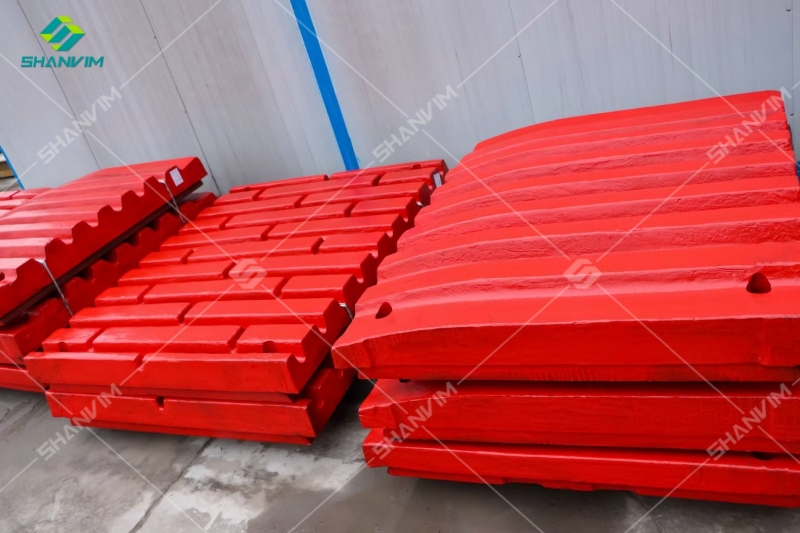
The art and science of heat treatment are fundamental to the performance of a crusher jaw plate. The processes of quenching, tempering, and water toughening are not mere steps in manufacturing; they are the keys to engineering the unique combination of hardness, toughness, and wear resistance required for efficient crushing. SHANVIM, with its decades of metallurgical expertise and a global footprint, stands at the forefront of this science. We don’t just cast jaw plates; we engineer them to deliver maximum performance. By focusing on precision heat treatment and selecting the right material for the application, SHANVIM continues to set the standard for durable and reliable crushing wear parts, supporting our clients in over 30 countries to build a more productive future. For expert guidance on selecting the optimal jaw plate and heat treatment for your specific crushing application, contact SHANVIM today. Our team is ready to engineer a solution that drives your success.
Post time: Jul-16-2026